2026 Top Trends in Logistics In China What to Expect?
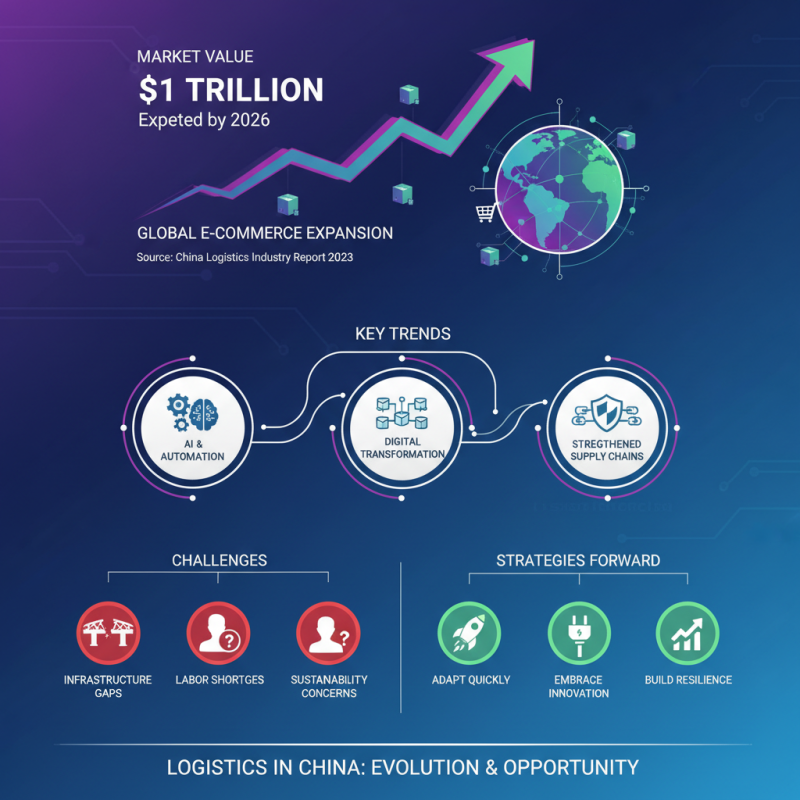
The logistics industry in China is evolving rapidly. By 2026, significant trends will shape its future landscape. According to the "China Logistics Industry Report 2023," the market value is expected to reach $1 trillion, showcasing impressive growth. The demand for efficient logistics solutions is rising, driven by e-commerce expansion. Logistics in China is set to leverage advanced technologies like AI and automation.
However, challenges persist. Infrastructure gaps and labor shortages may hinder progress. The reliance on traditional models raises questions about sustainability. The “2026 Logistics Trends” report indicates that companies need to adapt quickly to remain competitive. Digital transformation must become a priority. Strengthening supply chains is essential for resilience and growth. As the industry evolves, organizations must embrace innovation while addressing these critical issues.
Key Technological Advancements Shaping China's Logistics Landscape in 2026
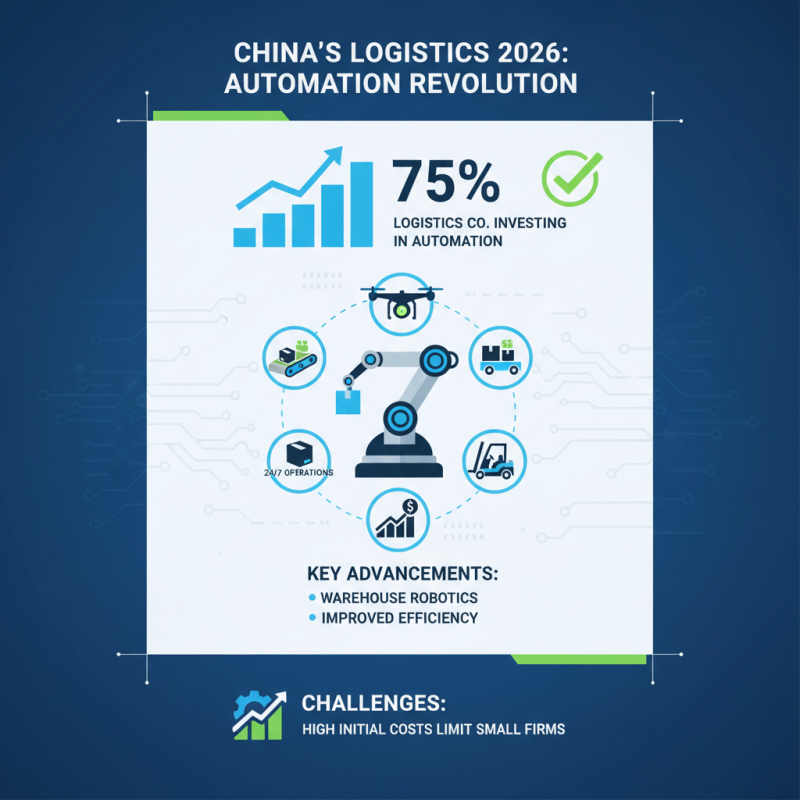
As we look toward 2026, several technological advancements are poised to reshape China’s logistics landscape. Automation will be at the forefront. According to a recent industry report, 75% of logistics companies plan to invest in automated technology by 2026. Robotic systems are being developed to manage warehouse operations. These systems can operate around the clock, improving efficiency. However, initial costs for automation remain high, limiting some smaller firms from adopting such technologies.
Artificial intelligence (AI) will transform logistics decision-making processes. By 2026, it is projected that AI will optimize supply chain management significantly. AI algorithms can analyze data in real-time, predicting demand with 85% accuracy in many scenarios. Yet, reliance on AI raises questions. For instance, how do logistics firms ensure data security? Cybersecurity will need to keep pace with these advancements to protect sensitive information.
Lastly, green logistics will gain momentum. Reports suggest that by 2026, 60% of logistics operations will implement eco-friendly practices. This is crucial as environmental concerns grow. However, transitioning to sustainable practices may slow down procedures, creating potential efficiency issues. Navigating these challenges will be essential as the industry evolves.
Sustainable Practices and Greening Logistics in China by 2026
Sustainable practices in logistics are gaining traction in China. By 2026, green initiatives will reshape supply chains. Companies are beginning to adopt electric vehicles for delivery. This shift reduces carbon footprints significantly. Moreover, solar panels on warehouses are becoming common. They generate renewable energy and lower operational costs.
However, challenges remain. Infrastructure for electric vehicles is still developing in many areas. Not all logistics companies have the resources to make these changes quickly. There’s also resistance to altering established practices. Some firms may hesitate to invest in new technologies. Education will be key for workers, as they need to adjust to these changes.
Recycling and waste management will play a larger role. Companies must rethink packaging materials. Using biodegradable options is a step in the right direction. Yet, not all businesses are ready to make the switch. The path to greener logistics is complex and requires commitment. A collective effort is essential for success in this transition.
The Influence of E-commerce Growth on China's Logistics Trends in 2026
The e-commerce boom in China is reshaping logistics in profound ways. More consumers are shopping online than ever before. This surge in demand drives the need for rapid delivery services. Warehouses are moving closer to urban areas. This is to meet the expectations of faster shipping times. Delivery speed is becoming a key competitive factor.
However, the logistics industry faces several challenges. Infrastructure in some regions struggles to keep pace with e-commerce growth. There are significant gaps in service levels between urban and rural areas. Additionally, labor shortages in logistics can hinder operations. Automation and technology could help, but implementation remains a hurdle for many companies.
Sustainability is also a pressing concern. Environmentally friendly practices are gaining traction. Many consumers prefer brands that prioritize green logistics. However, balancing efficiency with sustainability isn’t easy. Companies must rethink their strategies to adapt and thrive in this evolving landscape.
2026 Top Trends in Logistics In China
| Trend |
Description |
Impact on Logistics |
Projected Growth Rate (%) |
| Increased Automation |
Integration of AI and robotics in warehousing and distribution processes. |
Enhances efficiency, reduces labor costs and speeds up operations. |
25% |
| Green Logistics |
Implementation of eco-friendly practices in logistics operations. |
Reduces carbon footprint and promotes sustainability. |
20% |
| Last-Mile Delivery Innovations |
Utilization of drones and autonomous vehicles for final deliveries. |
Improves delivery speed and customer satisfaction. |
30% |
| Data Analytics in Supply Chain |
Use of big data to optimize operational efficiency. |
Facilitates better decision-making and inventory management. |
18% |
| E-commerce Expansion |
Rapid growth in online shopping driving demand for logistics services. |
Increases logistical requirements and challenges in delivery. |
40% |
Integration of AI and Automation in China's Supply Chain Operations by 2026
The integration of AI and automation in China's supply chain operations by 2026 is poised to reshape the logistics landscape. By 2025, over 80% of logistics companies in China are expected to utilize AI technologies for inventory management. This shift is driven by the increasing need for efficiency and accuracy in supply chain operations. Automated systems can reduce human errors and streamline processes, leading to a 30% increase in productivity.
Data reveals that automation could cut logistics costs by up to 25%. AI-powered predictive analytics will play a crucial role. These tools can forecast demand patterns with greater accuracy. However, the implementation challenges remain significant. A lack of skilled professionals in AI poses a risk. Additionally, many companies grapple with integrating new technologies into legacy systems.
As automation technologies evolve, ethical concerns arise. Issues related to data privacy and job displacement need addressing. Balancing technological advancement with human impact is essential. The future is exciting, yet complex. Understanding these nuances will be vital for stakeholders navigating this rapidly changing environment.
2026 Top Trends in Logistics in China: Integration of AI and Automation in Supply Chain Operations