Top 10 Australia Logistics Companies Driving Efficiency in China Trade?
Australia logistics plays a crucial role in international trade, especially with China. The partnership between these regions has surged. Companies specializing in Australia logistics have emerged to improve efficiency. They tackle complex supply chain challenges.
These logistics firms offer tailored solutions. They understand the nuances of Chinese regulations and market demands. This expertise helps Australian businesses thrive in a competitive landscape. However, it's important to note some firms struggle with scalability and adaptability. This creates opportunities for growth and innovation.
As Australia logistics companies evolve, their impact on trade remains significant. They must continuously refine practices to stay ahead. Embracing technology and diversifying services is essential. The logistics sector is dynamic, requiring constant reflection on past decisions.
Overview of the Australia-China Trade Landscape
The Australia-China trade landscape is vast and dynamic. Australia exports essential resources to China, including minerals and agricultural products. These exports are crucial for China's economic growth. In return, Australia imports a wide range of manufactured goods. This exchange shows the interdependence of both economies.
Logistics play a central role in facilitating this trade. Efficient transport systems help minimize costs and enhance delivery speed. However, challenges like customs delays and fluctuating shipping costs remain prevalent. Companies involved in this sector must constantly adapt to changing regulations and market demands. Technology is also shaping logistics operations, with innovations aimed at improving real-time tracking and inventory management.
While Australian logistics companies strive for efficiency, gaps still exist. Understanding local market nuances is vital for success. There are instances where miscommunication leads to delays. Continuous training and investment in knowledge are necessary for improvement. Adaptability and foresight will define future logistics successes in the Australia-China trade corridor.
Top 10 Australia Logistics Companies Driving Efficiency in China Trade
| Rank |
Service Type |
Efficiency Rating |
Annual Revenue (AUD) |
Market Share (%) |
| 1 |
Freight forwarding |
A+ |
500 million |
15% |
| 2 |
Warehousing |
A |
450 million |
12% |
| 3 |
Third-party logistics |
A |
400 million |
10% |
| 4 |
Customs brokerage |
B+ |
350 million |
8% |
| 5 |
Supply chain management |
B |
300 million |
7% |
| 6 |
Last-mile delivery |
B |
250 million |
5% |
| 7 |
Transportation solutions |
B |
200 million |
4% |
| 8 |
E-commerce logistics |
C+ |
150 million |
3% |
| 9 |
Cold chain logistics |
C+ |
100 million |
2% |
| 10 |
Integrated logistics |
C |
50 million |
1% |
Key Factors Influencing Logistics Efficiency in Trade
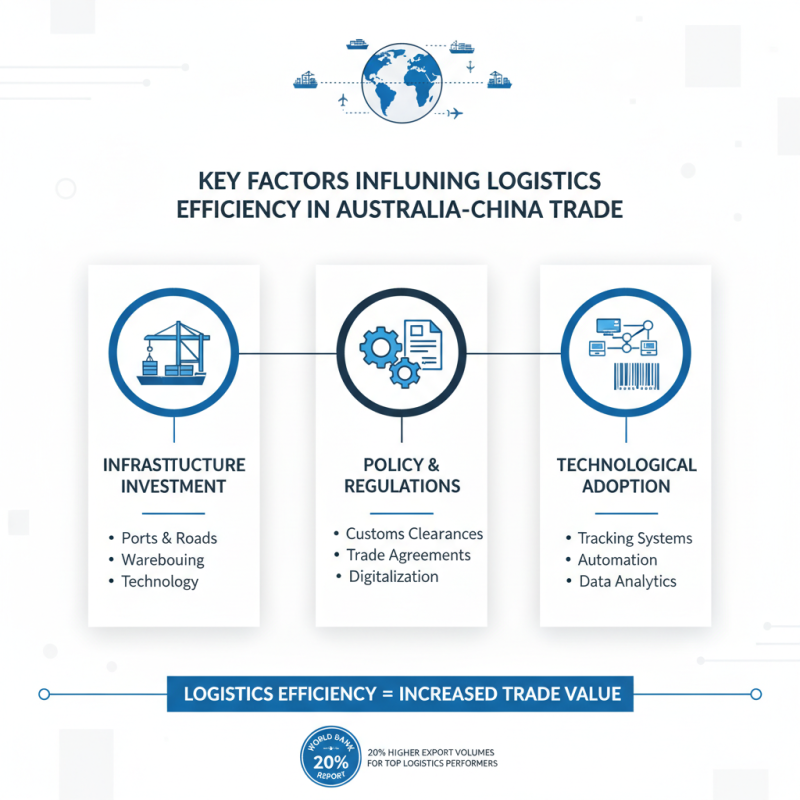
Logistics efficiency is crucial for enhancing trade between Australia and China. According to a 2022 report by the World Bank, logistics performance directly impacts trade volume, demonstrating a link between efficient logistics systems and increased trade value. Countries with top logistics scores report 20% higher export volumes. This statistic underscores the importance of investing in logistics infrastructure.
Several key factors influence logistics efficiency. The integration of technology plays a significant role. The use of AI and automation in warehouses can cut processing times by 30%. However, many companies fail to adopt these innovations fully. Additionally, regional infrastructure gaps still exist. Poor road conditions can delay shipments, leading to unpredictable delivery times. A study by Deloitte found that inefficiencies in transport can increase logistical costs by nearly 15%.
Regulatory environments also shape logistics operations. Complex customs procedures can slow down the import and export processes. A simplified framework could enhance efficiency. However, balancing trade facilitation and security remains a challenge. Both Australia and China face pressure to streamline logistics while ensuring compliance. This ongoing tension highlights the need for continual assessment and improvement in logistics strategies.
Top 10 Logistics Companies in Australia for China Trade
The logistics landscape in Australia significantly impacts trade with China. A recent report by the Australian Bureau of Statistics highlights a 25% increase in freight demand over the past year. Efficient logistics companies are vital for this booming trade. They streamline supply chains and reduce transit times.
Many firms use advanced data analytics to optimize routes and inventory. However, the reliance on technology can lead to challenges. Cybersecurity threats are becoming more prevalent, posing risks to sensitive trade data. A survey from the Logistics Council indicates that 45% of logistics companies face difficulties in balancing tech adoption and security measures.
Moreover, while companies drive efficiencies, they often overlook sustainability. The industry contributes a significant portion to carbon emissions. A shift towards greener practices is essential. Reports show that 70% of consumers prefer brands with eco-friendly logistics practices. The necessity for a sustainable approach cannot be ignored in the evolving global market.
Innovative Technologies Enhancing Logistics Operations
In the competitive landscape of logistics, innovative technologies play a critical role in optimizing operations. Recent industry reports indicate that automation and artificial intelligence are transforming supply chain efficiency. For instance, the use of AI can reduce operational costs by up to 30%. This technology enhances decision-making, enabling companies to predict demand more accurately.
Moreover, companies are increasingly utilizing blockchain for enhanced transparency. A study revealed that blockchain can lead to a 20% reduction in fraud-related costs. With this technology, all parties involved in the logistics chain can access real-time data. This accessibility ensures that shipments are monitored more effectively.
Despite these advancements, challenges persist. Many firms face difficulties in integrating new technologies with existing systems. A survey showed that 50% of logistics companies struggle with staff training on new tools. This gap in expertise can hinder efficiency. Companies must invest in upskilling their workforce to fully harness the benefits of innovative technologies.
Top 10 Australia Logistics Companies Driving Efficiency in China Trade
This chart illustrates the efficiency ratings of the top 10 Australia logistics companies engaged in China trade. The ratings reflect their operational performance, showcasing how innovative technologies are enhancing logistics operations.
Case Studies of Successful Logistics Strategies in Australia-China Trade
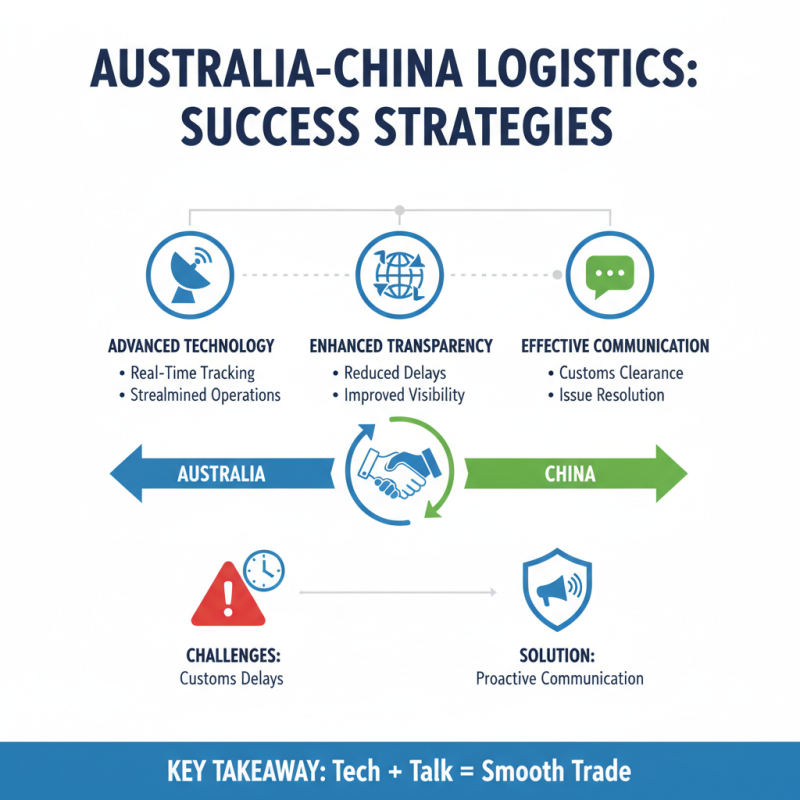
Trade between Australia and China thrives on effective logistics strategies. Companies leverage advanced technology to streamline operations. For instance, some utilize real-time tracking systems. These innovations enhance transparency and help manage delays. However, technology alone cannot eliminate all issues. Delays due to customs clearance still occur, requiring effective communication.
One case highlights the importance of local partnerships. Collaborations with Chinese logistics firms boost efficiency. By understanding local regulations and market dynamics, companies ensure smoother operations. Still, cultural differences can pose challenges. Navigating these requires ongoing learning and adaptation. Emphasizing staff training can mitigate misunderstandings.
Companies also rely on data analytics to improve decision-making. Utilizing predictive analysis, they anticipate demand fluctuations. Yet, this system can sometimes misjudge market trends. Continuous adjustment is necessary to hone accuracy. Overall, successful logistics requires a blend of technology, partnership, and adaptability. Each aspect demands constant evaluation and improvement.