Best Truck Shipping Options for 2026 to Save Your Money?
In 2026, choosing the right Truck Shipping options can significantly impact your budget. With rising fuel costs and fluctuating rates, it’s essential to explore viable alternatives. The logistics industry continuously evolves, leaving shippers to adapt to new trends.
Many companies offer various Truck Shipping solutions, making it tempting to rush into decisions. Choosing based on price alone can lead to unexpected costs. Think about reliability and service quality. A seemingly cheaper service could hurt your operations in the long run.
When planning your shipping strategy, consider seeking advice from industry experts. This can help you negotiate better rates. Always evaluate multiple providers to ensure you pick the most efficient one. Remember, Truck Shipping isn’t just a cost; it’s a crucial part of your supply chain.
Best Truck Shipping Methods to Consider in 2026
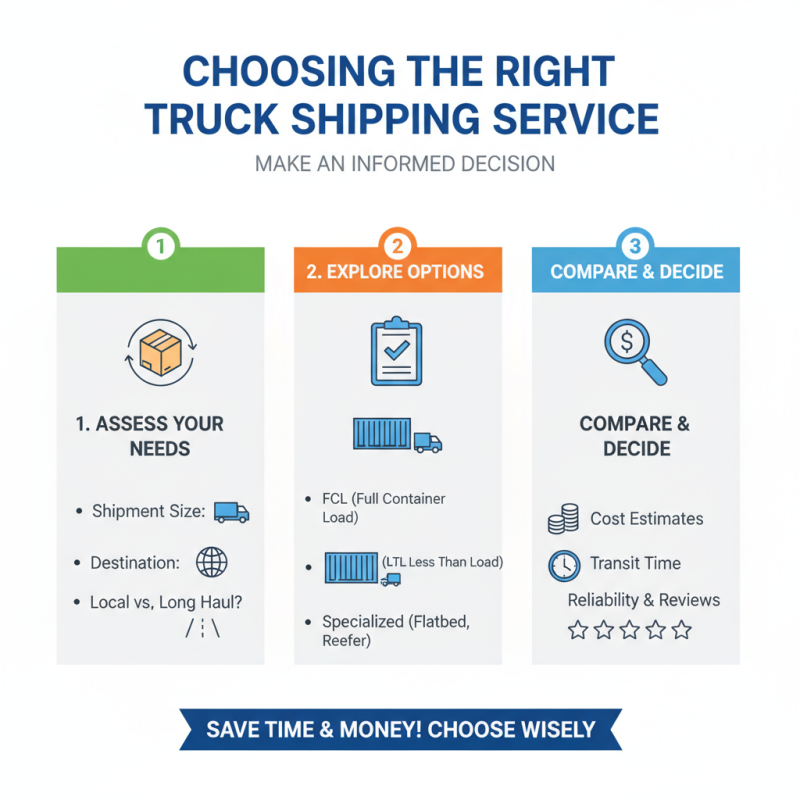
When considering truck shipping methods in 2026, several options stand out. Many shippers are leaning towards full truckload (FTL) services. FTL offers direct transport from origin to destination. This method usually minimizes handling and speeds up delivery. However, it may not be cost-effective for smaller shipments.
Less-than-truckload (LTL) services are also popular. This method allows multiple shippers to share trailer space. It can save money for smaller loads but may increase transit times. Coordination is key here. Waiting for other shipments to fill the trailer can cause delays, which may frustrate some.
Dedicated trucks provide another option. These trucks are reserved solely for one client’s shipment. While this method ensures timely deliveries, it can be more expensive. Shippers must weigh their budgets against their urgency. Flexibility in choosing the right trucking method is crucial. Analyzing shipping needs can save costs and improve efficiency.
Best Truck Shipping Options for 2026
Key Factors Influencing Truck Shipping Costs in 2026
When evaluating truck shipping costs in 2026, several key factors come into play. One major factor is fuel prices. Fluctuations in fuel can significantly affect shipping rates. A sudden spike can mean higher costs for consumers. It's essential to stay informed about these changes. Planning ahead can lead to savings.
Another critical aspect is labor costs. The trucking industry faces a driver shortage, leading to increased wages. This situation may push shipping prices higher. It’s a dilemma that impacts both service providers and customers. Effective negotiation with carriers could help mitigate some costs.
Additionally, consider distance and route efficiency. Longer distances generally mean higher costs, but not always. Some routes are more direct and cost-effective. Evaluating different shipping companies can highlight discrepancies in pricing. Be aware that not all carriers are equally reliable. Research is key to avoiding unforeseen expenses.
Best Truck Shipping Options for 2026 to Save Your Money?
| Shipping Option |
Estimated Cost (per mile) |
Average Transit Time |
Weight Limit |
Key Factors Influencing Costs |
| Full Truckload (FTL) |
$2.50 |
3-5 days |
Up to 45,000 lbs |
Distance, fuel prices, demand |
| Less Than Truckload (LTL) |
$3.00 |
5-7 days |
Up to 10,000 lbs |
Weight, dimensions, freight class |
| Intermodal Shipping |
$1.80 |
5-10 days |
Up to 65,000 lbs |
Mode of transport, distance |
| Reefer Trucking |
$3.50 |
4-6 days |
Up to 44,000 lbs |
Temperature control, distance |
| Flatbed Trucking |
$2.20 |
5-8 days |
Up to 48,000 lbs |
Load type, weather conditions |
Comparing Traditional vs. Digital Truck Shipping Solutions
When comparing traditional and digital truck shipping solutions for 2026, both have unique advantages. Traditional methods often rely on established networks. These can provide a sense of reliability and comfort. However, they may come with hidden costs and inflexibility. Phone calls and paperwork can be time-consuming. Miscommunications can lead to delays, which can be costly.
On the other hand, digital solutions offer speed and convenience. Users can track shipments in real-time. Instantly comparing quotes can help save money. However, these platforms might lack personal touch. Not all users are tech-savvy, which can be frustrating. Some people miss the human interaction they associate with traditional shipping. Therefore, it's essential to weigh the pros and cons of each option.
Ultimately, balancing cost with convenience defines the best choice. Some may find the lower prices of digital solutions appealing. Others might prefer traditional methods for peace of mind. It’s a personal decision that requires careful consideration. Reflecting on past experiences can guide future shipping choices.
How to Optimize Your Truck Shipping for Cost Savings in 2026
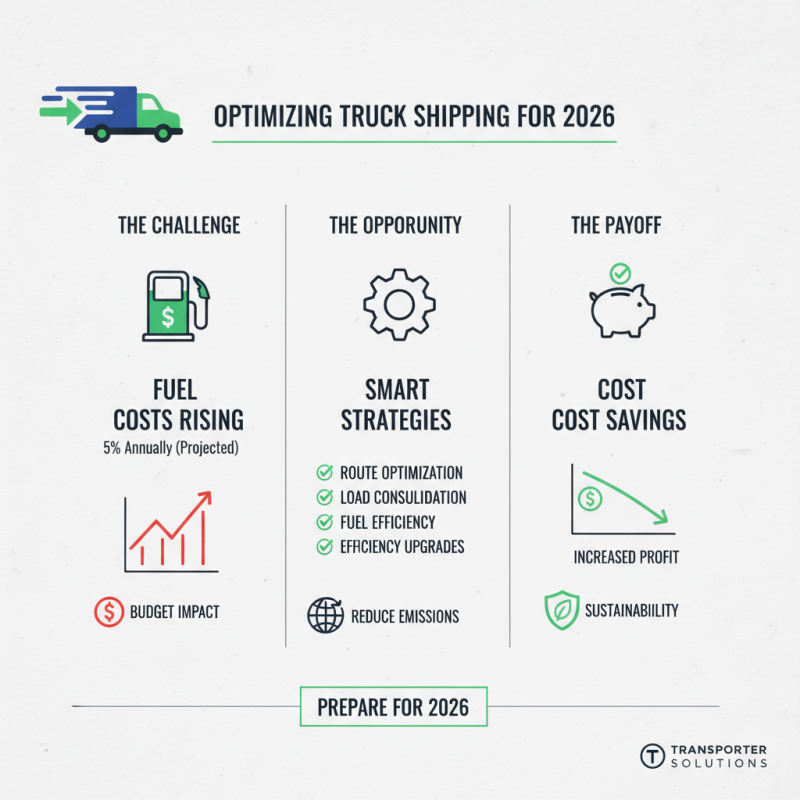
As businesses prepare for 2026, optimizing truck shipping becomes crucial. Increasing fuel costs, projected to rise by 5% annually, significantly impact transport budgets. Companies need smart strategies to minimize these expenses.
One effective tactic is route optimization. Software tools can analyze traffic patterns. These tools help reduce unnecessary miles. A study found that businesses can save up to 10% on fuel costs through better planning. However, many companies still overlook this technology. They stick with old routes, costing them money in the long run.
Another avenue for savings is load consolidation. Combining shipments minimizes trips. According to transportation analysts, strategic load management can cut costs by 15%. Still, many shippers fail to utilize this approach effectively. Each unoptimized truckload represents missed opportunities for savings. Focusing on these strategies may reshape shipping operations significantly in 2026.