How to Choose the Right Truck Shipping Service for Your Needs?
Choosing the right truck shipping service can feel overwhelming. There are many options available, and each service has its strengths. Understanding your unique needs is crucial to making the best choice.
Truck shipping allows for flexibility and efficient delivery options. Whether you're shipping goods across town or to another state, the right carrier can make a difference. Many factors influence your decision, such as cost, service reliability, and delivery speed.
It's essential to research potential carriers. Look for reviews and industry ratings. Each choice comes with pros and cons, and reflecting on these can help you avoid mistakes. Consider what matters most for your shipments. Will you prioritize speed or cost? Your answers will guide you toward the best truck shipping service.
Understanding Your Truck Shipping Needs
Understanding your truck shipping needs is crucial in the logistics industry.
A recent study indicated that 70% of freight moves via trucks in the United States.
This highlights the importance of selecting a reliable service tailored to your requirements.
Assessing your load size is the first step. For small shipments,
less-than-truckload (LTL) services are often more cost-effective.
However, if you're dealing with larger volumes,
full truckload (FTL) options may be necessary.
Knowing your weight and dimensions helps avoid unexpected costs.
Research shows that improper load estimation can lead to up to 25% higher shipping costs.
Another key factor is delivery speed. Depending on the urgency, you might choose
expedited shipping. Yet, this often incurs higher fees.
Industry insights reveal that 35% of shippers find balancing cost and speed a significant challenge.
Transparency in communication with your chosen service provider is essential.
Regular updates and tracking can mitigate issues,
but many companies struggle in this area.
Understanding these nuances will empower you in making informed decisions for your truck shipping needs.
Evaluating Different Types of Truck Shipping Services
When evaluating different types of truck shipping services, it's crucial to consider your specific needs. There are various options available, each with unique benefits. For instance, full truckload (FTL) shipping is ideal for large shipments. It allows for faster delivery since it involves a single shipment per truck. On the other hand, less-than-truckload (LTL) services cater to smaller shipments and can be more cost-effective. Be mindful that LTL may lead to longer transit times due to multiple stops.
Evaluate the transport routes, too. Some services focus on regional aspects. Local carriers often provide faster service and may have a better understanding of traffic patterns. National companies can offer broader reach and more scheduling flexibility, which may be beneficial. However, their prices might be higher, and you could lose personalized service.
Ultimately, think about reliability and safety. Research customer reviews and track records. Find out how companies handle damage claims. Avoid providers with high rates of lost or damaged cargo. Additionally, ensure they have appropriate licensing and insurance. Making an informed choice involves more than just price—consider the entire experience with the service.
Factors to Consider When Choosing a Truck Shipping Provider
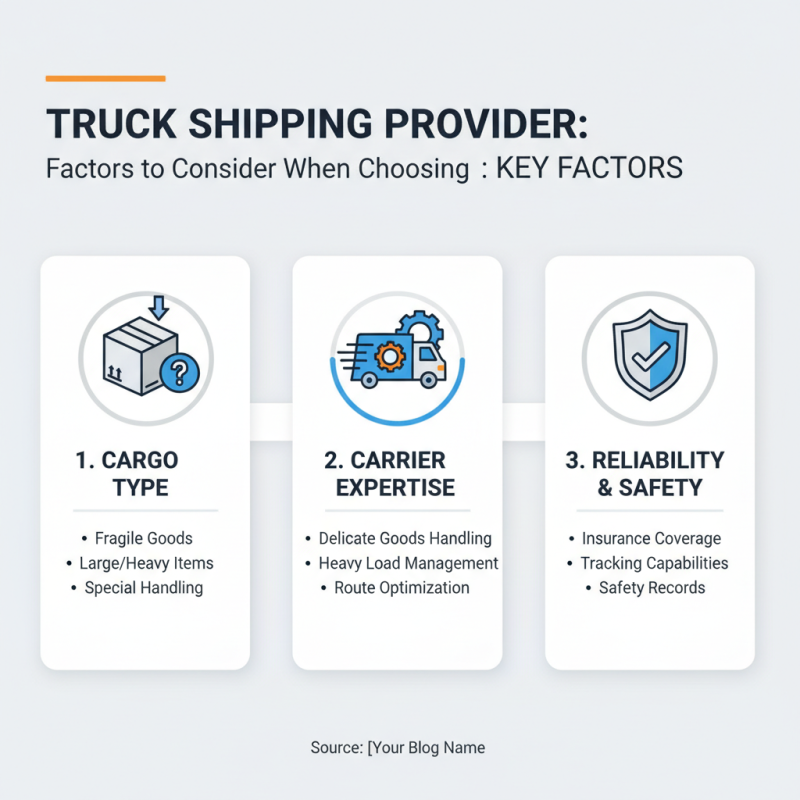
When choosing a truck shipping service, several factors demand careful consideration. Analyze your cargo type first. Different types of materials require specific handling and transportation methods. For fragile items, seek carriers with expertise in delicate goods. If you transport large or heavy items, confirm the provider’s capabilities in managing such loads.
Cost is also a significant factor. Gather multiple quotes to understand pricing norms. However, the lowest price doesn’t always guarantee quality. Reliability is key. Examine the shipping provider's reputation through customer reviews or industry ratings. A provider with good feedback is often more trustworthy.
Tips: Focus on the provider’s communication. A responsive team can make a difference in service quality. Next, look into tracking options. Being able to monitor your shipment reduces anxiety. Finally, don’t hesitate to ask questions. Your shipment deserves the best care, and a knowledgeable provider will gladly address your concerns.
Comparing Costs and Services of Truck Shipping Options
When comparing truck shipping options, understanding costs is crucial. Rates vary based on distance, weight, and cargo type. Regional carriers may offer lower prices but can lack the extensive network larger companies provide. It's essential to assess your specific shipping needs. Look for services that cater to your cargo characteristics.
Additionally, consider what services are included in the price. Does the company offer tracking? What about packaging options? Some carriers may charge extra for loading or unloading, impacting overall costs. Ask questions and read the fine print. Sometimes, a slightly higher price can mean better service and reliability.
Shipping experience also plays a role. Companies with years in the industry often have established processes. They can handle potential issues quickly. Research reviews to gauge reliability and service quality. Trustworthy sources of information can guide your choice, but don’t overlook the value of firsthand experiences. Keep in mind that the best choice might not always be the cheapest option available.
Assessing the Reputation and Reliability of Truck Freight Carriers
When choosing a truck freight carrier, reputation and reliability are key. Look for carriers with positive reviews from customers. Reliable companies often highlight their safety records. Search for online testimonials and third-party ratings. They can reveal a lot about service quality.
Experience counts in the trucking industry. Longevity usually indicates a proven track record. Yet, newer companies can also excel. They might offer competitive rates or innovative services. Don’t overlook the importance of direct communication. A responsive carrier can make a significant difference. Seek those who address concerns promptly.
Not all carriers manage unexpected issues well. Some might delay shipments without notice. Investigate how they handle such situations. Transparent policies are a good sign. Remember that a company's mission and values should resonate with your own. Aligning these can lead to a productive partnership. Trust your instincts when something feels off.