How to Optimize Australia Logistics for Efficient Delivery?
Australia Logistics plays a critical role in the nation's economy. Efficient logistics can significantly enhance delivery systems, reducing costs and improving service. According to the Australian Logistics Council, the logistics industry contributes about 8% to Australia's GDP. However, it faces challenges like rising fuel costs and complex regulations.
Logistics companies must adapt to these dynamics. About 55% of logistics firms report difficulties in meeting delivery timelines. This situation highlights the need for optimized practices. Companies are exploring technology solutions. Automation and AI can streamline operations. Yet, many businesses are hesitant to invest, fearing high upfront costs.
Enhancing Australia Logistics requires a mixed approach. Stakeholders should analyze their supply chains regularly. Continuous assessment can reveal inefficiencies. Collaboration within the industry may also foster innovation. In a rapidly changing landscape, complacency can hinder growth. Embracing change is crucial for success.
Strategies for Improving Last-Mile Delivery in Australia’s Logistics Sector
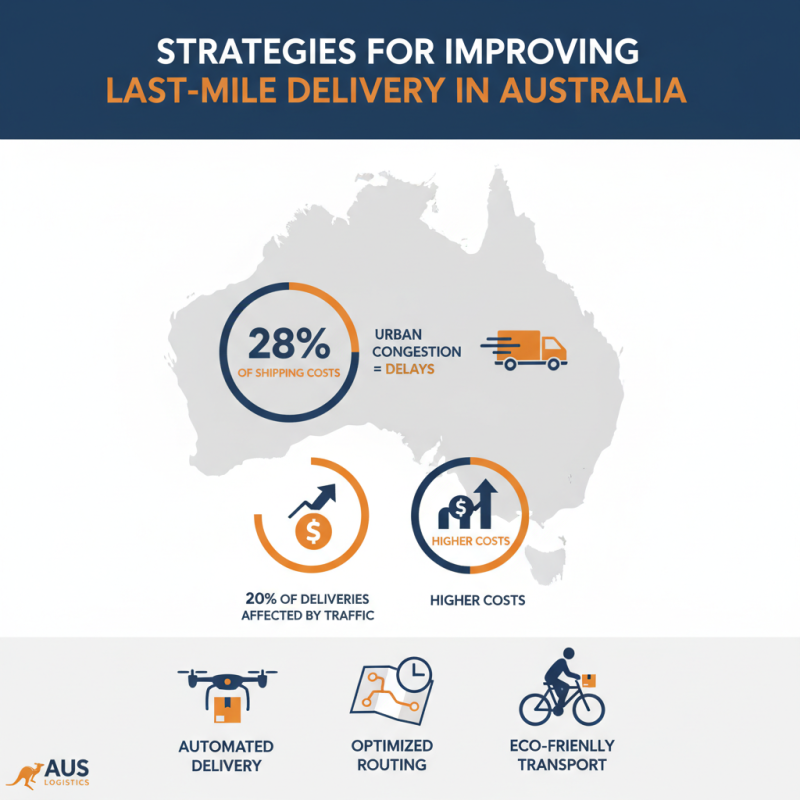
Last-mile delivery is critical in Australia's logistics sector. It often accounts for over 28% of shipping costs, according to industry reports. This means improvements here can significantly affect overall efficiency. As cities grow, the challenge worsens. Urban congestion leads to delays and higher costs. In fact, 20% of deliveries are impacted by traffic conditions.
One way to optimize delivery is using data analytics. Understanding delivery routes and traffic patterns can enhance planning. Real-time data allows for quicker adjustments. This ensures that packages reach customers efficiently. Incorporating electric vehicles or cargo bikes can also reduce emissions and costs. This approach promotes sustainability while cutting down on delivery times.
Tips: Focus on local partnerships. Collaborating with local courier services can provide faster delivery options. Implement pick-up points in high-demand areas. This can ease pressure on last-mile deliveries. Improving customer communication through tracking updates can also enhance satisfaction. Better-informed customers tend to be more understanding in case of delays. There’s always room for reflection and adjustment in this rapidly evolving field. Many companies still struggle to meet expectations. Efficient last-mile delivery is not a solved problem, and continuous innovation is essential.
Leveraging Technology: IoT and AI in Australian Logistics Optimization
The logistics landscape in Australia is evolving rapidly. Leveraging technology like the Internet of Things (IoT) and artificial intelligence (AI) can greatly enhance efficiency. IoT devices can track shipments in real-time. This leads to improved visibility across the supply chain. Notifications about delays can be sent instantly, allowing for quicker adjustments.
AI plays a pivotal role in optimizing delivery routes. Algorithms analyze traffic patterns and weather conditions. This helps determine the fastest routes to destinations. However, implementing AI also comes with challenges. Data quality can be inconsistent, which affects outcomes. Companies must invest time in cleaning and managing data.
Integrating IoT and AI isn't without its hurdles. The initial setup might demand significant resources. Staff training is essential but often overlooked. Without skilled personnel, the technology can underperform. Reflecting on these aspects helps companies strategize better for the future. They must recognize that progress in logistics involves continuous learning and adaptation.
How to Optimize Australia Logistics for Efficient Delivery?
| Logistics Aspect |
Technology Used |
Benefits |
Challenges |
| Real-Time Tracking |
IoT Sensors |
Improved transparency and customer satisfaction |
Initial setup costs and maintenance |
| Route Optimization |
AI Algorithms |
Reduced fuel costs and delivery times |
Data accuracy and algorithm dependency |
| Warehouse Management |
Automated Systems |
Increased efficiency and reduced labor costs |
High initial investment and technology training |
| Customer Communication |
Chatbots and Apps |
24/7 customer support and self-service options |
User acceptance and technology integration |
| Inventory Management |
Predictive Analytics |
Better stock control and reduced waste |
Data dependence and forecasting errors |
Analyzing Transportation Costs: Data-Driven Approaches for Australia
In analyzing transportation costs for efficient logistics in Australia, data-driven approaches are essential. Understanding the cost structure reveals key insights. Fuel prices fluctuate, impacting overall expenses. Tracking these changes can guide strategic shifts in route planning.
Logistics providers must delve into local market patterns. Urban areas may have higher congestion costs, while rural routes often face delays. These factors complicate efficient deliveries. Data analytics can highlight underperforming routes. It can also suggest alternatives that save both time and money.
While technology offers powerful tools, challenges remain. Data consistency can vary. Sometimes, incomplete datasets lead to misguided decisions. Continuous monitoring and adjustment are crucial. Reflecting on these obstacles fosters improvement and innovation in logistics.
Transportation Costs Analysis in Australia
This bar chart illustrates the average transportation costs per kilometer for various modes of transport in Australia. Understanding these costs is crucial for optimizing logistics and improving delivery efficiency.
Enhancing Supply Chain Visibility through Advanced Tracking Systems
Advanced tracking systems are crucial for optimizing logistics in Australia. They enhance supply chain visibility significantly. According to a 2022 report from the Australian Logistics Council, firms using these systems reported a 30% decrease in order fulfillment times. This improvement directly impacts customer satisfaction and operational efficiency.
Real-time tracking provides insights into inventory levels and delivery status. Companies can monitor each shipment's journey. A study showed that 75% of Australian logistics providers who adopted GPS tracking systems improved their delivery accuracy. However, many still struggle with data integration. The complexity can lead to gaps in visibility. Some firms still rely on outdated methods that hinder efficiency.
Investing in advanced tracking can be costly upfront. Yet, the long-term benefits often outweigh the initial investment. Increased transparency allows businesses to make informed decisions. It can also enhance communication with partners and customers. As logistics technology evolves, Australian companies must adapt to maintain competitiveness. Embracing these tools is not just an option; it is becoming necessary for success.
Sustainability Measures: Reducing Carbon Footprint in Australian Logistics
Sustainability is becoming essential in Australian logistics. Companies are under pressure to cut their carbon footprint. This need for efficiency often clashes with environmental goals. Many logistics operations still rely on conventional fuel sources. This reliance raises serious concerns about emissions and pollution.
One effective strategy is optimizing delivery routes. Shortening distances can reduce fuel consumption significantly. Using sophisticated software can aid in planning. It helps avoid congested areas, which wasted time and energy. However, not all companies invest in this technology. Some still stick to outdated methods. This can lead to missed opportunities for improvement.
Adopting electric vehicles is another way to enhance sustainability. This shift can dramatically lower emissions. Yet, the infrastructure for electric vehicles is still developing in Australia. Charging stations are scarce in some regions. Companies must weigh the benefits against the challenges. Sustainability efforts should not just be a checkbox but a continuous journey.