What is Railway Transport and How Does it Impact Global Trade?
Railway transport plays a vital role in global commerce, connecting markets and facilitating trade. Renowned railway expert Dr. Emma Thompson states, “Railway transport is the backbone of international trade.” This insight highlights how railways enable efficient movement of goods across borders.
In many regions, the railway system is the most reliable freight transport option. This mode reduces energy consumption and carbon emissions compared to trucking. Despite these benefits, many still overlook challenges within the industry, such as aging infrastructure and limited rail networks in some countries.
Ultimately, railway transport impacts economies on a global scale. It allows businesses to lower costs and expand reach. However, a concerted effort is necessary to enhance this critical network and overcome existing obstacles. Only then can we fully harness the potential of railway transport in shaping the future of global trade.
Definition and Overview of Railway Transport
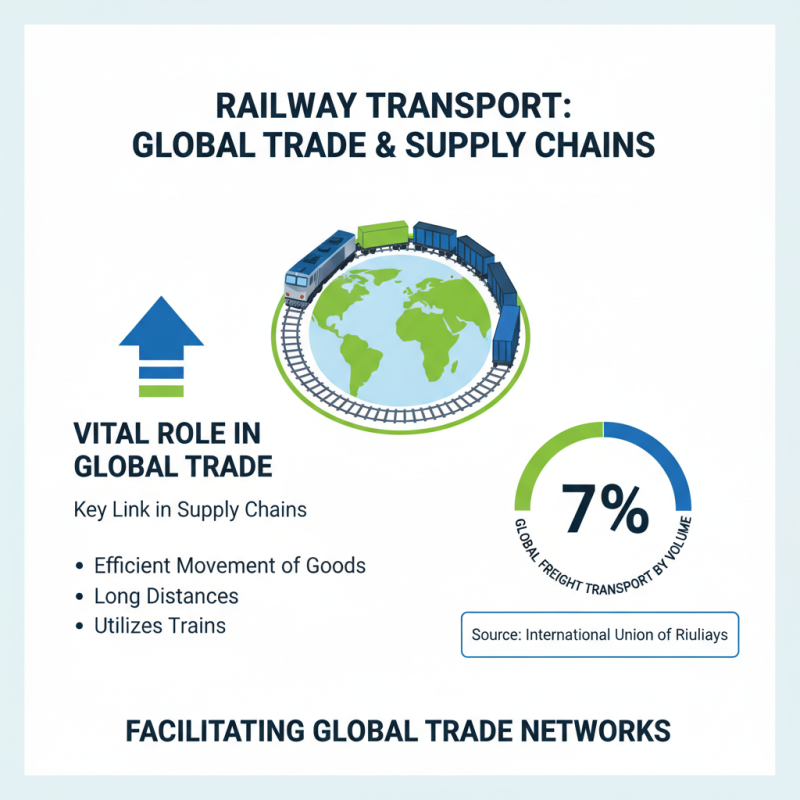
Railway transport plays a vital role in global trade, acting as a key link in supply chains. This mode of transport utilizes trains to move goods across long distances efficiently. According to the International Union of Railways, freight by rail accounts for around 7% of global freight transport by volume. This figure underscores the importance of rail networks in facilitating trade.
The efficiency of railway systems is notable. Trains can move a single load of freight that matches the capacity of thousands of trucks. This brings environmental benefits, as rail transport emits significantly less CO2 per ton-mile compared to road transport. However, challenges remain. Infrastructure investments are necessary, and many regions lack modern rail networks.
Tip: Consider the region when assessing railway transport's impact. Some countries have robust systems, while others still rely heavily on roads.
As we review the benefits, it’s essential to address limitations. Weather conditions and aging infrastructure can disrupt services. A study from the World Bank indicates that approximately 25% of railway lines in developing nations require urgent upgrades. These factors can create bottlenecks in the supply chain, impacting trade efficiency.
Tip: Regular assessments and updates of rail networks can offer significant improvements in trade logistics.
Historical Development of Railway Transport
The evolution of railway transport began in the early 19th century. The first steam locomotives changed how goods and people moved. By the mid-1800s, rail networks expanded across Europe and North America. This expansion facilitated trade between regions. According to the World Bank, railways can move goods more efficiently than road transport. Over 70% of global freight by ton-kilometer is transported by rail.
Despite its benefits, railway transport has faced challenges. Infrastructure can be costly. Maintenance is often overlooked, leading to delays. A report from the International Union of Railways highlights that outdated systems hindered progress in several countries. More investment is needed to modernize these networks.
Rail transport significantly contributes to global trade. Yet, its development remains uneven. Some regions enjoy advanced railway systems, while others struggle. Balancing efficiency with environmental concerns is crucial. The International Energy Agency notes that railways emit less CO2 than trucks. However, reliance on fossil fuels still exists. Continued innovation is essential for future growth.
Global Railway Freight Traffic (in Billion Ton-Kilometers)
Key Components and Technologies of Railway Systems
Railway transport plays a crucial role in global trade. It efficiently moves goods across vast distances. Key components of a railway system include tracks, locomotives, and signaling technology. Each of these components enhances operational efficiency and safety.
Tracks form the foundation of railway networks. High-quality, well-maintained tracks reduce delays and improve travel speed. According to a report by the International Union of Railways, rail freight transport can be up to four times more energy-efficient than road transport. This efficiency contributes to lower carbon emissions and a smaller environmental footprint.
Locomotives are another vital element. Modern locomotives often use advanced technologies such as electric and hybrid systems. These technologies not only optimize fuel consumption but also lower operational costs. Proper maintenance is essential; poorly maintained locomotives can lead to breakdowns and increased expenditures.
Tip: Regularly invest in technology upgrades to ensure maximum performance. Older systems may incur more operational errors, leading to costly delays.
Signaling systems ensure safe and efficient operation. Advanced signaling technologies, like positive train control, can prevent accidents. However, implementing new systems requires significant investment and training. Organizations must weigh these costs against potential safety benefits.
Tip: Conduct regular training for staff on new technology and systems. An informed workforce is crucial for effective operations.
Impact of Railway Transport on Global Trade Efficiency
Railway transport plays a vital role in enhancing global trade efficiency. It connects regions, allowing goods to move seamlessly across borders. Trains can carry large quantities of freight, reducing transportation costs per unit. This efficiency benefits both businesses and consumers by lowering prices and increasing access to goods.
However, the system is not without challenges. Infrastructure gaps exist in some regions, causing delays. Aging rail networks can lead to disruptions, which affect supply chains. Environmental concerns also arise from increased freight traffic. Balancing these issues is crucial for sustainable growth in rail transport.
Despite these setbacks, the potential for improvement is significant. Innovations such as automated systems and greener technologies can enhance rail efficiency. Investing in rail infrastructure has long-term benefits. Enhanced railway networks can further integrate global markets, facilitating trade like never before. Focused efforts are needed to ensure that the railway system evolves to meet these demands.
Challenges and Future Trends in Railway Transport Systems
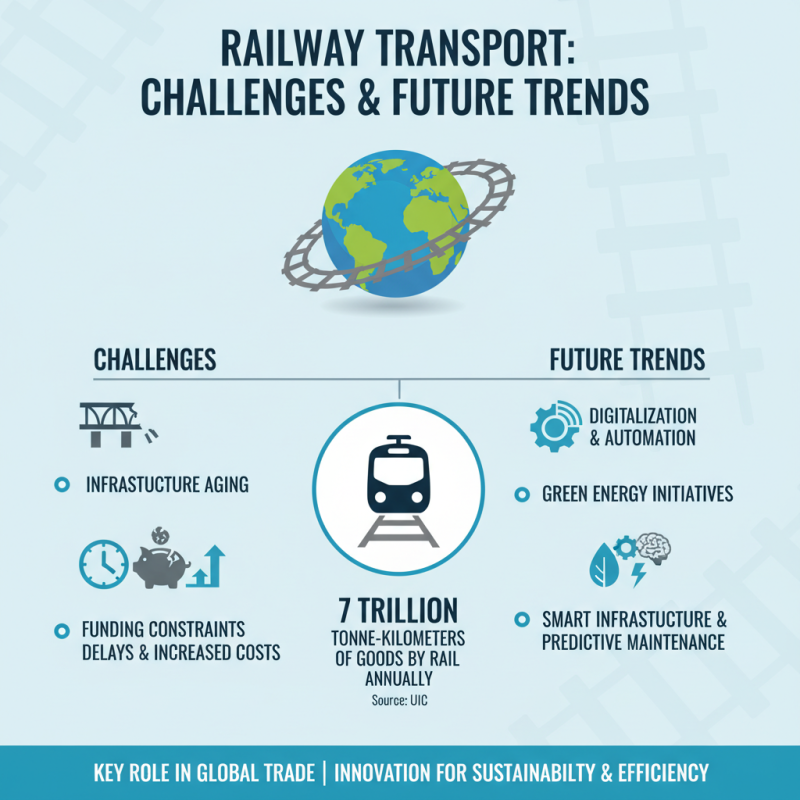
Railway transport plays a critical role in global trade, but it faces several challenges that could hinder its effectiveness. According to the International Union of Railways (UIC), more than 7 trillion tonne-kilometers of goods travel by rail annually. However, infrastructure aging and funding constraints significantly threaten efficiency. Many countries struggle to allocate sufficient resources for upgrades. This has resulted in delays and increased costs, affecting international supply chains.
Environmental concerns add to the complexity. Railways are generally more sustainable. Yet, emissions from diesel locomotives remain a concern. The Global Rail Innovation Network reports that electrification could reduce emissions by up to 30%. However, transitioning to greener technologies requires investments many regions find challenging. Some rail networks still depend on outdated, less-efficient engines, which reflects a pressing need for innovation.
The future of railway transport must emphasize technology integration. Digital solutions can improve tracking and scheduling. Industry experts suggest that adopting smart technologies can alleviate many traditional inefficiencies. However, the implementation rate of these technologies is slow. There's a risk of falling behind in a rapidly evolving logistics landscape. Addressing these issues will be crucial for enhancing the reliability and sustainability of railway systems across borders.