Why is Sea Transport Essential for Global Trade Success?
Sea transport plays a crucial role in the success of global trade. According to Dr. James Kingston, a leading expert in maritime logistics, "Without efficient sea transport, global trade would grind to a halt." This statement highlights the significance of shipping routes in connecting markets worldwide.
The vast majority of goods traded internationally are transported by sea. It is a cost-effective method that enables businesses to deliver products across continents. Many industries rely on the reliability of sea transport to maintain their supply chains. However, challenges do arise, such as port congestion and weather disruptions. These stresses can hinder timely deliveries, impacting global commerce.
As we examine the importance of sea transport, we must reflect on areas that need improvement. Investing in infrastructure is vital. Ports must modernize to accommodate larger vessels. Additionally, adopting greener technologies in shipping can reduce environmental footprints. Such changes are essential for the future of sea transport and its role in global trade.
The Historical Significance of Sea Transport in Trade Development
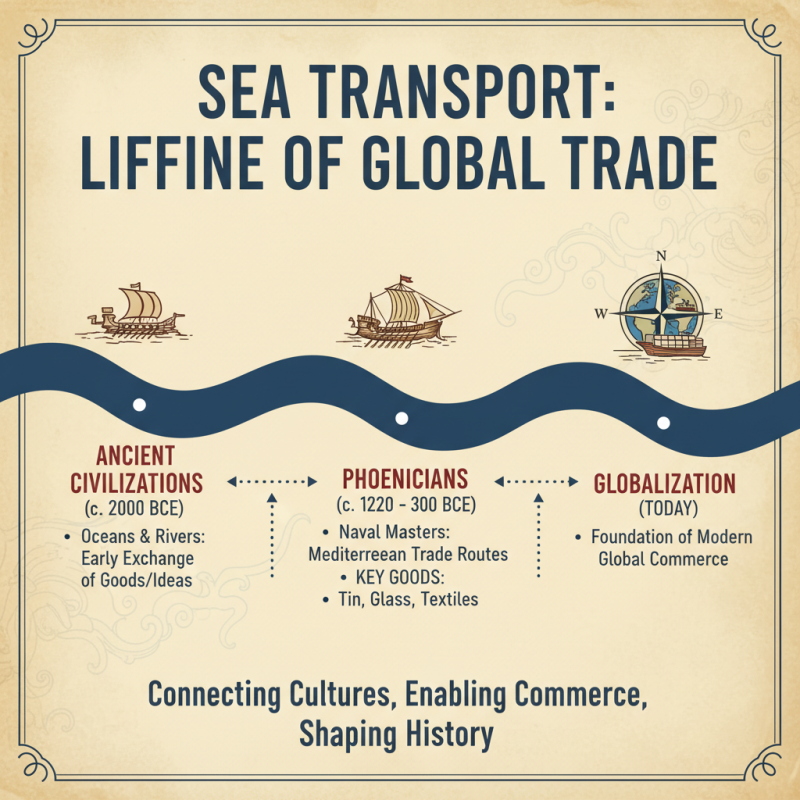
Sea transport has played a pivotal role in trade development for centuries. Ancient civilizations relied on oceans and rivers for the exchange of goods and ideas. The Phoenicians, known for their naval prowess, established trade routes across the Mediterranean. Their ships enabled the movement of valuable commodities, such as tin, glass, and textiles, connecting distant cultures. This set the stage for global trade as we know it today.
Over the years, innovations in shipbuilding and navigation transformed sea transport. The introduction of the compass and advanced hull designs made voyages safer and more efficient. However, historical records reveal periods of stagnation due to piracy and geopolitical conflicts. These elements disrupted trade routes, emphasizing the fragility of maritime commerce. Today, despite technological advancements, similar challenges persist. Marine pollution and international regulations often complicate the shipping industry.
Understanding the historical significance of sea transport can guide contemporary trade strategies. It is essential to reflect on past experiences to address current challenges in global commerce. The evolution of maritime trade underscores the need for sustainable practices. By learning from historical vulnerabilities, modern trade can adapt and thrive in an ever-changing environment.
Key Advantages of Sea Transport over Other Modes of Transport
Sea transport plays a significant role in global trade. It is often more efficient than other methods. One key advantage is capacity. Ships can carry large volumes of goods, from bulk commodities to containers packed with various products. This ability lowers costs per unit, making international trade more viable for many businesses.
Another advantage is fuel efficiency. Ships consume less fuel per ton of cargo compared to trucks or planes. This is crucial for reducing greenhouse gas emissions. However, shipping can be slow. Delays in loading and unloading can impact delivery schedules. It’s essential for businesses to manage expectations regarding transit times.
Additionally, sea transport has a lower risk of damage during transit. Many goods benefit from stable conditions aboard ships. However, the reliance on this mode can expose vulnerabilities, such as port congestions or weather disruptions. Companies need contingency plans for these scenarios. Despite some drawbacks, the advantages of sea transport make it indispensable for global trade.
Why is Sea Transport Essential for Global Trade Success? - Key Advantages of Sea Transport over Other Modes of Transport
| Advantage |
Description |
Typical Use Cases |
Cost Efficiency (%) |
| Large Capacity |
Can carry bulk goods such as oil, grains, and containers. |
Bulk shipping, intercontinental trade |
30-50% |
| Environmental Impact |
Compared to air freight, sea transport emits less CO2 per ton-km. |
International shipping, eco-friendly initiatives |
20-40% |
| Cost-Effectiveness |
Lower shipping rates compared to air transport. |
Import/export of bulky items and raw materials |
70-80% |
| Safety of Cargo |
Less risk of damage compared to other modes due to stable transport. |
Transporting heavy machinery, vehicles |
- |
| Global Reach |
Access to remote regions and islands through ports. |
Trade with developing nations, island trade |
- |
The Role of Sea Transport in Global Supply Chain Management
Sea transport plays a vital role in global supply chain management. It facilitates the movement of goods across vast distances. Without it, many industries would face significant challenges. Goods travel by ship, connecting countries and markets. This method is cost-effective and capable of transporting large volumes. However, reliance on sea transport can lead to inefficiencies. Delays due to weather or port congestion can disrupt schedules.
The diversity of cargoes, from raw materials to finished products, shows the importance of this mode. Ships can transport everything, enabling international trade. Ports serve as critical hubs in this network. They often face bottlenecks, slowing down the entire supply chain. Businesses must adapt to these realities. Investing in better logistics and communication systems is essential.
Despite its effectiveness, sea transport is not without its issues. Environmental concerns arise from shipping emissions. The balance between efficiency and sustainability needs discussion. As global trade evolves, so must the systems that support it. This continuous need for improvement highlights the complexities of managing a global supply chain. Embracing innovation could provide potential solutions to ongoing challenges.
Challenges and Innovations in Modern Sea Transport
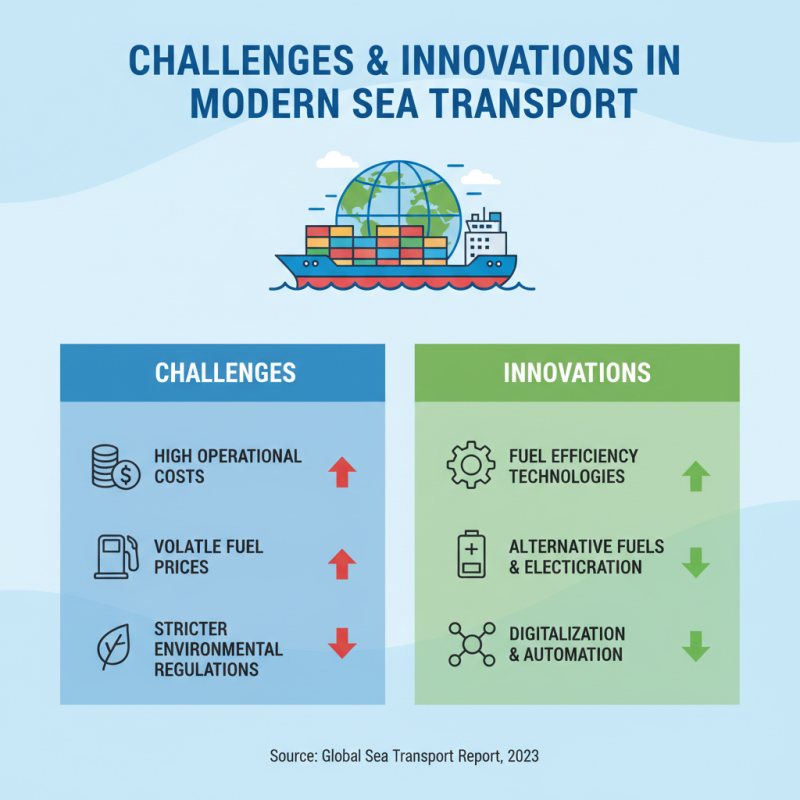
Sea transport plays a crucial role in global trade, but it faces numerous challenges. High operational costs are often a significant barrier for shipping companies. Fluctuations in fuel prices can drastically affect shipping rates. Additionally, environmental regulations are becoming stricter. These regulations aim to reduce emissions but can be costly to implement.
Innovation is essential to address these challenges. Many companies are exploring alternative fuels, such as LNG and biofuels. These alternatives can help reduce carbon footprints. Furthermore, advancements in technology, like automation and digitization, streamline operations. Drones and AI are being tested for cargo handling and logistics management. However, these innovations come with their own set of challenges, such as cybersecurity risks and high initial investment costs.
Despite great strides, the shipping industry still has room for improvement. Not all innovations are universally adopted, causing gaps in efficiency. Collaboration between stakeholders is often lacking. This can lead to inconsistent safety and operational standards. A collective approach to sharing best practices could enhance the overall reliability of sea transport. There is much to consider as the industry navigates these turbulent waters.
The Future of Sea Transport in an Evolving Global Market
The future of sea transport is undergoing a transformation. As global markets become more interconnected, efficient shipping methods are crucial. Innovations in maritime technology promise to enhance efficiency. However, the industry also faces challenges, such as environmental regulations and rising fuel costs.
Sustainability is a growing concern for shipping companies. Many are investing in cleaner fuels and greener technologies. Yet, this transition is not without difficulties. Companies must balance costs while trying to comply with new regulations. The shift towards sustainability is not immediately achievable for all players in the market.
Digitalization is another key element. Advanced tracking systems and automated logistics can streamline operations. These technologies help address issues like cargo delays and loss. While promising, they can also create vulnerabilities. Cybersecurity is a pressing issue that the industry must address. Adaptation to these changes will be critical for sea transport's role in global trade.
Global Sea Transport: Key Factors Impacting Trade Success