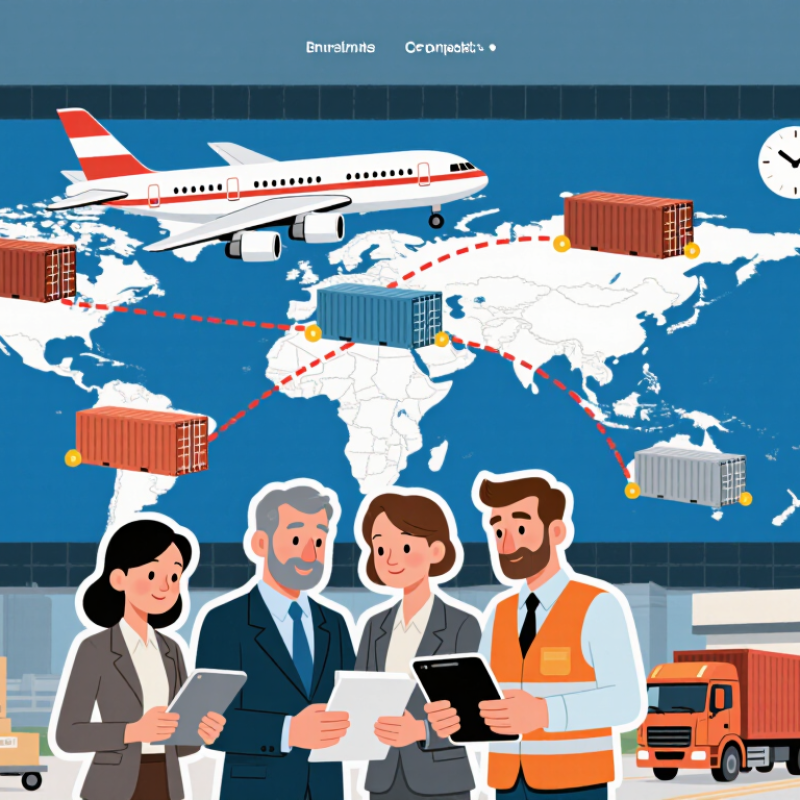
Choosing the right China Air Agent can shape your entire international shipping experience. It affects delivery speed, paperwork accuracy, communication, and the condition of your cargo. A low quote may look attractive, yet hidden handling fees or weak coordination can create expensive delays.
A dependable agent should explain each stage clearly. Ask how they manage pickup schedules, airport handovers, airway bills, customs documentation, and final delivery. Request realistic transit estimates, not impressive promises. You should also check their operating history, service coverage, insurance arrangements, and customer references. A professional China Air Agent will provide written terms and answer detailed questions without avoiding difficult points.
Small details matter. Does the agent confirm cargo dimensions before booking? Can they send tracking updates when a flight changes? Do they understand your product category and destination requirements? These answers often reveal more than a polished website. Secure communication matters, too. Clear emails, named contacts, and consistent records reduce misunderstandings between suppliers, warehouses, airlines, and buyers.
No agent is perfect.
That deserves attention.
The best choice is not always the cheapest or largest provider. It is the partner that admits limitations, explains possible risks, and offers practical solutions within lawful shipping standards. Before committing, compare several agents using the same questions and documents. Review their replies carefully, especially unclear charges, vague delivery promises, and missing responsibilities. The following ten tips will help you evaluate service quality with greater confidence and choose an air freight partner suited to your actual needs.
Choosing a China air agent should begin with measurable cargo competence, not a polished website.
IATA reported 58.8 million tonnes of global air cargo in 2023. That figure shows the industry’s scale and volatility. It is a benchmark, not a promise that every shipment needs air freight. Ask for lane-specific data, including uplift rates, transit times, missed cut-offs, and claims resolution. Request twelve months of records, with sensitive details removed. Small evidence often reveals more than broad promises.
A capable agent should explain its operating controls clearly. Check documentation practices, air waybill accuracy, export paperwork, cargo screening, and handover timestamps. Compare quoted capacity with space actually secured during peak weeks. IATA’s Air Cargo Market Analysis for 2023 recorded changing demand and capacity conditions. Therefore, fixed transit claims deserve careful questioning. Ask how delays are escalated, who approves routing changes, and when status updates arrive. Keep one test shipment. It may expose gaps before volume moves.
Score ten areas: credentials, lane experience, carrier access, pricing clarity, tracking, cut-off discipline, packaging advice, exception handling, insurance support, and references. Use shipment-level KPIs, not general satisfaction. Track exceptions. A useful dashboard shows booking acceptance, departure reliability, document errors, and delivery variance. Even strong agents can miss forecasts or communicate late. Ask for a corrective-action example, not a perfect success story. Also verify contract terms, data protection, and lawful cargo procedures before signing.
A reliable China air agent should provide verifiable CAAC licensing details. Check the license number, legal entity, business scope, and renewal status through official channels. Ask for evidence. Do not rely on a scanned certificate alone. The company name should match its contracts, invoices, and customs documents. Small inconsistencies can signal weak internal controls.
IATA accreditation can indicate established air-freight procedures, but it requires careful checking. Request the accreditation reference and confirm its current validity. Also ask who handles booking, airway bills, claims, and shipment tracking. Their answers should be specific, not rehearsed. Dates matter. A recent audit record or compliance procedure can reveal how seriously the agent manages risk. I would also compare the agent’s service promises with actual response times, because impressive sales language does not always reflect daily performance.
Dangerous-goods training credentials deserve closer attention. Ask whether the staff handling regulated air cargo hold current, role-specific training certificates. Check the training date, course scope, assessment method, and refresher requirements. Procedures should cover classification, packaging checks, marking, labeling, documentation, and emergency communication. Never accept vague assurances. A responsible agent should explain how they reject incomplete or unsafe cargo information. I used to view training certificates as enough, but that was too simple. Competence also appears in routine questions, careful document review, and willingness to delay a booking when details remain unclear.
Choosing a China air agent requires more than comparing the headline freight rate. Ask for a line-by-line quotation before judging the offer. Confirm the chargeable weight, dimensions, fuel surcharge, security fee, and China airport fees. Some quotes use a low base rate, then add expensive airport handling charges later.
Request the calculation behind every fee. Fuel surcharges may change with carrier schedules or billing periods. China airport fees can include terminal handling, documentation, screening, and warehouse services. Ask whether these costs apply at origin, destination, or both. Ask for the formula. Numbers can mislead.
I also compare the total landed cost, not only the airfreight amount. Include export handling, customs clearance, destination delivery, duties, taxes, insurance, and possible storage. A shipment with a higher freight rate may still cost less overall. The agent should explain assumptions in plain language and provide a validity period for the quotation. That matters.
Use a sample shipment with real carton sizes, weight, product value, and delivery address. Then request two or three comparable quotes. Experienced agents should identify dimensional-weight risks before booking. I learned this late: a small carton redesign reduced billed weight more than a rate negotiation. Still, estimates are not guarantees. Weather, capacity, inspections, and currency changes can affect the final invoice. Leave room for those variables, and review the first invoice carefully.
| # | Tip | What to compare | Calculation or check | Evidence to request |
|---|---|---|---|---|
| 1 | Compare the complete quote, not just the airfreight rate. | Base airfreight, fuel surcharge, security charge, origin handling, documentation, and destination charges. | Build a like-for-like quote using the same route, cargo details, service level, and quote validity period. | An itemized quote showing each charge, its currency, unit, and whether it is estimated or confirmed. |
| 2 | Check how the fuel surcharge is applied. | Surcharge amount, charging basis, route, and effective dates. | Confirm whether it is charged per chargeable kilogram, as a percentage, or by another stated method; do not assume it is included in the base rate. | The current surcharge schedule and written confirmation of when it may change. |
| 3 | Identify China-origin airport and handling fees. | Origin terminal handling, security screening, warehouse handling, and export documentation charges, where applicable. | Ask which charges apply at the actual departure airport and whether they are per shipment, per kilogram, or subject to a minimum. | A charge breakdown tied to the named origin airport; fees and billing bases can vary by airport, carrier, and shipment. |
| 4 | Verify chargeable weight before comparing rates. | Actual gross weight, carton dimensions, volumetric weight, and the carrier’s applicable divisor. | Chargeable weight is generally the greater of gross weight and volumetric weight. A commonly used air-cargo calculation is dimensions in cm ÷ 6,000 for kg, but confirm the divisor and rounding rules for the service. | A reweigh and remeasurement policy, plus the final chargeable weight shown on the shipping documents. |
| 5 | Compare the same route and service conditions. | Origin and destination airports, direct or connecting routing, transit time, and service type. | Check whether the quote is airport-to-airport, door-to-airport, or door-to-door; these services include different work and costs. | A proposed routing, estimated transit time, cut-off time, and a clear statement of included services. |
| 6 | Include destination charges in the comparison. | Destination handling, customs entry, storage, delivery, and other local charges, where applicable. | Separate charges payable to the agent from charges payable to the airline, terminal, customs broker, or delivery provider. | A destination-charge schedule and the free-time and storage terms that apply after arrival. |
| 7 | Calculate total landed cost, not freight cost alone. | All transport and import costs through delivery to the agreed destination. | Total landed cost = origin pickup and export costs + airfreight and surcharges + origin and destination handling + customs brokerage + applicable duties and taxes + final delivery and other agreed costs. | A side-by-side cost sheet that identifies exclusions, assumptions, and the party responsible for each cost. |
| 8 | Confirm export customs and cargo-document requirements. | Export declaration responsibility, commercial invoice, packing list, and air waybill details. | Check that the shipper, consignee, product description, quantities, and declared values are consistent across documents. | A document checklist, submission deadlines, and a clear process for correcting errors or handling customs queries. |
| 9 | Check capacity, cut-offs, and quote validity. | Space confirmation, cargo acceptance deadline, planned departure, and rate validity. | Treat schedules and rates as subject to confirmation until the shipment is booked; confirm how changes in weight, dimensions, or departure date affect the price. | Written booking confirmation, cut-off details, and the terms for rate changes or cancellation. |
| 10 | Review exception handling and payment terms. | Claims process, cargo insurance options, communication, payment timing, and responsibility for unexpected charges. | Confirm whether insurance is included or optional; freight charges alone do not establish cargo insurance coverage. | Written service terms, claims deadlines, insurance limits and exclusions, and an escalation contact. |

Note: Airport fees, fuel surcharges, rates, and transit times vary by airport, carrier, route, shipment details, and date. Request a current, shipment-specific written quotation before booking.
A China air agent should prove transit reliability with shipment-level records, not polished promises. Ask for the last 90 days of lane-specific data: pickup time, flight departure, arrival, customs release, and final delivery. Compare the agent’s on-time definition with Cirium’s 2023 On-Time Performance Review, which reported 83.42% on-time arrivals for airlines worldwide. This is a useful aviation reference, not a cargo-service guarantee. Cargo handoffs and clearance can add delays that airline punctuality figures do not capture.
Tip: Request a sample report for your exact origin, destination, and service type. Check at least 30 recent shipments, including delayed ones. Calculate the share delivered by the agreed deadline, then review median transit time and the 90th-percentile delay. Averages can hide bad weeks. IATA reported that global air cargo demand rose 11.3% in 2023, showing how quickly market conditions can shift; ask how the agent adjusts routings when capacity tightens.
Keep the test practical. Track a trial shipment from warehouse pickup to signed delivery, and compare each timestamp with the quoted schedule. Ask who sends delay alerts, how quickly they respond, and what evidence supports recovery plans. If an agent offers only a “usual transit time,” press for a dated lane report. I would still treat a small trial as imperfect evidence; one smooth shipment proves little.
A China air agent should provide an audit trail, not just a tracking link. Ask for time-stamped records covering pickup, warehouse receipt, export declaration, flight departure, and delivery. IATA reported that global air cargo demand rose 11.3% in 2024, measured in cargo tonne-kilometers, while capacity increased 7.回. Busy lanes can make exceptions harder to spot. Request written escalation steps for missed scans, schedule changes, and damaged cartons. Test the process with one shipment before relying on it at scale.
Customs expertise matters at the document level. Ask who checks invoice descriptions, declared values, and shipment data before filing, and how corrections are handled. A capable agent should explain its process clearly without promising guaranteed clearance. Insurance needs the same scrutiny: confirm coverage limits, exclusions, valuation basis, and whether coverage applies during each transport stage. Read the policy wording, not only the quotation. Then check claims performance: required evidence, filing deadlines, average response times, and a named contact. IATA’s 2024 figures show a fast-growing market, but growth alone does not prove service quality. Keep that distinction in mind. A practical test is to ask the agent to walk through a realistic claim using a damaged outer carton and delivery photos. The answer may reveal gaps. IATA, Air Cargo Market Analysis, 2024.
Suggested evaluation weights for comparing air-freight agents. These are planning recommendations, not measured industry statistics.
Prioritize shipment visibility, customs expertise, and responsive claims support. Verify each agent’s capabilities against your routes, cargo, and service requirements.