2026 Top International Express Shipping Options Explained
In the evolving landscape of global commerce, understanding "International Express" shipping options is crucial. John Smith, a logistics expert at Global Shipping Solutions, emphasizes this point: "The right express service can define your business's success." As companies expand internationally, choosing the right shipping method becomes complex.
International express shipping is not just about speed; it’s about reliability and cost-effectiveness. Many businesses struggle with the diverse options available. Some may prioritize fast delivery, while others focus on budget constraints. Each choice carries its own set of challenges and advantages. It requires a nuanced understanding to navigate this industry.
Decisions in international shipping can impact customer satisfaction significantly. Late deliveries and hidden fees often create frustration. It's essential for businesses to reflect on their options seriously. In a world where customer expectations rise constantly, selecting the best "International Express" solution is more important than ever.

Top International Express Shipping Services Available in 2026
In 2026, the landscape of international express shipping is evolving rapidly. Companies must adapt to increasing demands for speed and reliability. A recent survey found that 70% of businesses prioritize fast delivery over cost. This trend is reshaping service offerings in the shipping industry.
Several key players are expanding their networks to facilitate same-day or next-day international services. Enhanced tracking technologies are a game changer. Customers can now monitor their shipments in real-time, leading to increased satisfaction. Data shows that 68% of consumers are willing to pay extra for this feature. However, not all services meet these standards. Restrictions on certain regions and items can hinder efficiency.
Moreover, sustainability is becoming critical. Reports indicate that 55% of consumers prefer eco-friendly shipping options. While many services are attempting to reduce their carbon footprint, challenges remain. Companies often struggle to balance cost and environmental impact. The push for greener solutions is ongoing, yet progress is uneven within the industry.
Key Features of Leading Express Shipping Options
When considering express shipping options, speed and reliability are crucial. A recent survey highlighted that 75% of customers prioritize delivery time over costs. Timely delivery enhances customer satisfaction. In fact, 42% of businesses reported an increase in repeat customers when they utilize fast shipping methods.
Key features of leading options include various delivery times. Some services promise delivery within 24 hours, while others take 3-5 days. Businesses should assess their needs carefully. A 2022 logistics report found that companies using a mix of air and ground services improved efficiency by 30%. Flexibility in choosing shipping routes can also lower costs and enhance speed.
On the downside, express shipping can be costly. Many firms struggle with high shipping expenses that impact their bottom line. Despite advances in technology, errors like lost packages and delivery delays persist. Research indicates that 15% of shipments face issues during transit. Companies must reflect on how to balance speed and efficiency against operational challenges.
Comparative Analysis of Shipping Costs for Different Services
When comparing international express shipping options, cost is a major factor. Different services offer various rates based on weight, destination, and delivery speed. For instance, a package weighing five kilograms to Europe might cost significantly less with one service than another. This creates a need for careful analysis.
Shipping fees can vary greatly. One option might have a lower base rate but add extra costs for fuel surcharges. Another might present an appealing flat rate but has slower delivery times. Understanding these nuances is crucial. Why do some carriers seem cheaper? Often, they are cutting corners. One should always check for hidden fees.
Despite the differences, comparisons can be tricky. A service that excels in speed may not be the most cost-effective for heavy packages. As you evaluate your shipping needs, consider the balance between efficiency and price. Reflecting on past choices helps—some shipments took too long or cost too much. Learning from these experiences can lead to better decisions in the future.
Factors Influencing the Choice of Express Shipping Methods
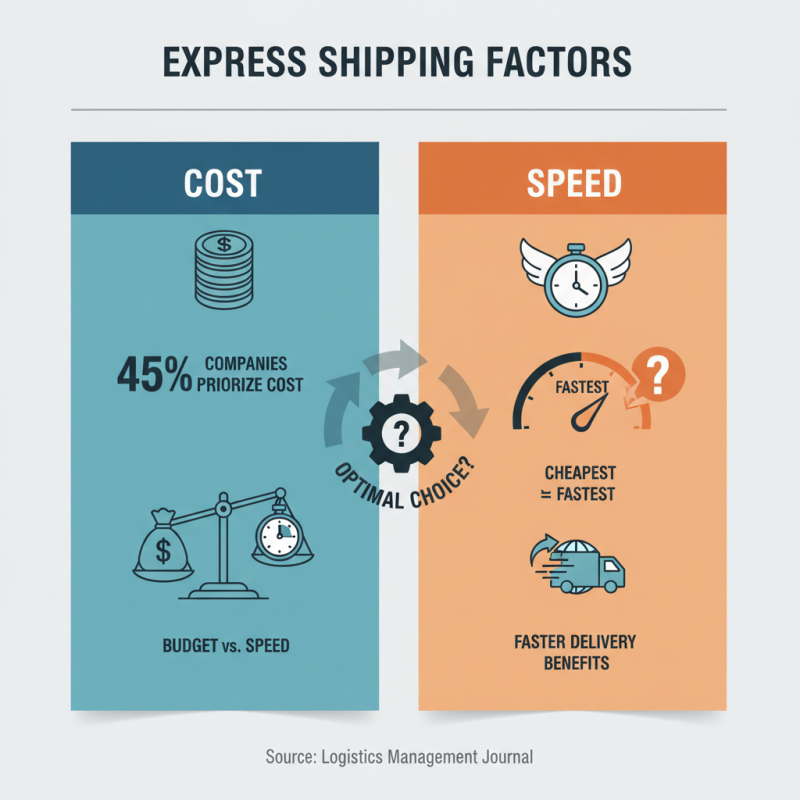
When selecting express shipping methods, various factors come into play. Cost is a major consideration. Businesses must weigh the benefits of faster delivery against budget constraints. According to a report from the Logistics Management Journal, nearly 45% of companies prioritize cost when choosing shipping options. However, the cheapest service may not always meet the necessary speed.
Delivery time is also crucial. Consumers expect quick service. A recent study by the International Express Association found that 70% of shoppers are willing to pay extra for faster shipping. This urgency drives companies to select different express options. The choice influences customer satisfaction and repeat business.
Reliability cannot be overlooked. Delivery errors can harm a company's reputation. Data shows that 32% of businesses have faced delays due to unreliable shipping partners. These incidents prompt firms to reflect on their shipping strategies. Balancing cost, speed, and reliability is no easy task. Companies often find themselves reassessing their priorities to meet customer demands.
Future Trends in International Express Shipping for Global Commerce
In the realm of global commerce, the future of international express shipping is undergoing a significant transformation. According to a 2023 industry report, nearly 70% of businesses plan to increase their investment in express shipping solutions. This trend reflects the growing demand for faster and more reliable services. Electronic commerce plays a key role, with online sales expected to reach $6.4 trillion by 2024. Many companies are striving to keep up with consumer expectations for rapid delivery times.
Moreover, sustainability is becoming a hot topic in shipping practices. An estimated 50% of logistics firms are now focusing on reducing carbon emissions. Consumers are aware of their environmental impact, and they prefer eco-friendly options. However, achieving this balance between speed and sustainability poses challenges. Not all providers have the infrastructure to implement green practices effectively. The shift towards automation and advanced tracking technologies is also evident. A significant chunk of companies is investing in innovations, yet not everyone is prepared to adapt to these changes seamlessly.
As the industry evolves, data-driven decision-making will become crucial. A recent survey indicated that 80% of successful companies rely on analytics for supply chain management. Yet, many smaller players lack the tools for effective data utilization. This discrepancy could widen the gap in service quality among firms. The challenges are real, but the opportunities for growth and improvement are even greater.
2026 Top International Express Shipping Options