China Top Chinese Warehouse Options for Global Buyers?
In today's global marketplace, the significance of a reliable Chinese warehouse cannot be overstated. According to a report by Statista, e-commerce sales in China are projected to reach approximately $3 trillion by 2025. This surge creates rising demand for efficient logistics solutions. Chinese warehouses play a pivotal role in this ecosystem, serving as crucial nodes for many international businesses seeking to optimize their supply chains.
Chinese warehouses offer numerous advantages, such as strategic locations and cost efficiencies. In fact, the China Logistics Information Center reported a 12% increase in warehousing efficiency in recent years. However, prospective buyers must carefully consider their options. Not all warehouses are created equal. Factors such as facility technology, inventory management, and compliance with international standards vary significantly among providers.
Investing in a Chinese warehouse can yield high rewards, but challenges exist. Issues like language barriers and differing regulations may pose obstacles for global buyers. Companies must conduct thorough research and engage with reputable logistics partners. By doing so, they can navigate potential pitfalls and leverage the vast opportunities that Chinese warehouses provide.

China's Warehouse Infrastructure for Global Trade Efficiency
China's warehouse infrastructure plays a crucial role in enhancing global trade efficiency. With over 4,000 logistics centers, China stands as a logistics powerhouse. According to a 2023 report by the China Federation of Logistics and Purchasing, the country's logistics industry value reached approximately $1 trillion, showcasing significant growth.
Efficient warehousing increases order fulfillment speed. The average delivery time in China has decreased to 24 hours for domestic shipments. Yet, challenges persist. Many warehouses still lack automation, leading to increased operational costs. A July 2023 survey revealed that 45% of warehouse operators struggle with outdated technologies.
Tips: Consider partnering with local experts to navigate these complexities. Employing automated systems can enhance throughput and accuracy. Staying updated with market trends can provide a competitive edge. Embracing data analytics may improve decision-making but can come with initial costs and require training. Balancing these factors is essential for success in China's logistics landscape.
China's Warehouse Infrastructure for Global Trade Efficiency
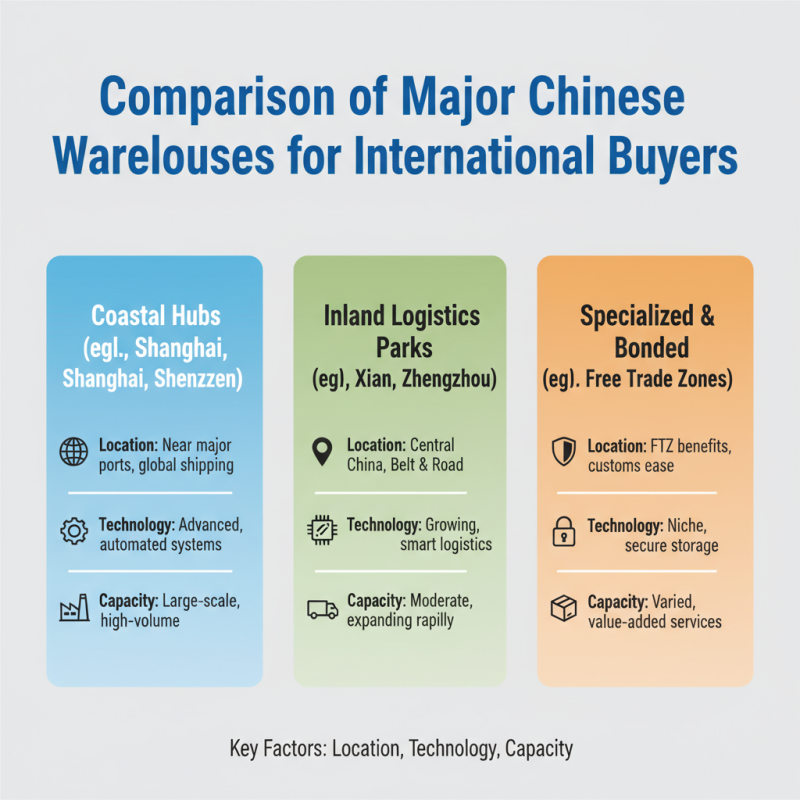
Comparison of Major Chinese Warehouses for International Buyers
Choosing a warehouse in China can be complex. Many options cater to global buyers, each with unique strengths and weaknesses. Factors such as location, technology, and capacity influence decisions.
Major cities like Shenzhen and Guangzhou feature advanced facilities. They offer quick access to major shipping routes. Their capabilities often include temperature control and automated systems. However, costs can vary significantly among these warehouses. Certain locations may experience higher prices due to demand.
Security is another crucial factor. While many warehouses implement strict safety measures, some may fall short of standards. It's essential to assess these shortcomings before making a choice. Some facilities may lack adequate insurance or oversight. Buyers should conduct their own research to ensure reliability and trustworthiness. This method helps avoid potential pitfalls in international logistics.
Key Factors to Consider When Choosing a Warehouse in China
When selecting a warehouse in China, several key factors must be considered to ensure effective logistics. Location is crucial. Proximity to major ports can reduce shipping times and costs. According to a recent industry report, warehouses located near Shanghai and Shenzhen offer an average shipping time reduction of 30%. This efficiency is critical for businesses that require quick turnaround times.
Storage capacity is another important factor. As e-commerce grows, demand for warehouse space has surged. The latest statistics indicate that the Chinese warehousing market is projected to reach $81.2 billion by 2025, indicating a need for ample space. However, larger facilities may not always be better. Overhead costs can increase significantly with larger spaces. Business owners must evaluate whether their inventory levels justify the costs.
Operational flexibility and technology integration also play a significant role. Modern warehousing often involves using automated systems for inventory management. Firms that leverage technology can improve accuracy and response times. However, implementing these technologies can require a significant initial investment. Regular audits and assessments are essential to ensure that the warehouse operations align with the company's evolving needs. Balancing these factors is key to achieving optimal warehousing solutions in China.
China Top Chinese Warehouse Options for Global Buyers
| Warehouse Location |
Size (sq ft) |
Storage Capacity (units) |
Special Features |
Average Monthly Cost (USD) |
Proximity to Major Ports |
| Shenzhen |
50,000 |
10,000 |
Temperature Control |
2,000 |
15 miles |
| Shanghai |
70,000 |
15,000 |
24/7 Security |
3,500 |
10 miles |
| Guangzhou |
40,000 |
8,000 |
Automated Systems |
1,800 |
20 miles |
| Ningbo |
60,000 |
12,000 |
Flexible Layout |
2,200 |
25 miles |
| Tianjin |
55,000 |
11,000 |
Cold Storage |
2,400 |
30 miles |
Logistics and Shipping Services Offered by Chinese Warehouses
Chinese warehouses provide various logistics and shipping services tailored for global buyers. These services play a crucial role in international trade, with data indicating that the cross-border eCommerce market is expected to reach $4.8 trillion by 2025. The efficiency of these warehouses can significantly impact delivery speed and cost.
Many warehouses in China offer comprehensive logistics solutions, from storage to shipping. For example, some facilities allow for real-time inventory tracking. This ensures buyers know the status of their goods at all times. Furthermore, China's extensive transportation network supports rapid shipping options. Air freight may take one to three days, while sea freight can take about two to three weeks. However, challenges persist. Not all warehouses are equipped to handle diverse product categories. This leads to delays in specific sectors.
The adoption of technology in operations is rising. According to industry reports, approximately 30% of warehouses are implementing automation and AI systems. Such innovations promise to reduce errors and improve order accuracy. Yet, not all firms can afford these advancements, leading to disparities. Therefore, buyers must carefully assess their warehouse options to find the right balance between cost and service quality.
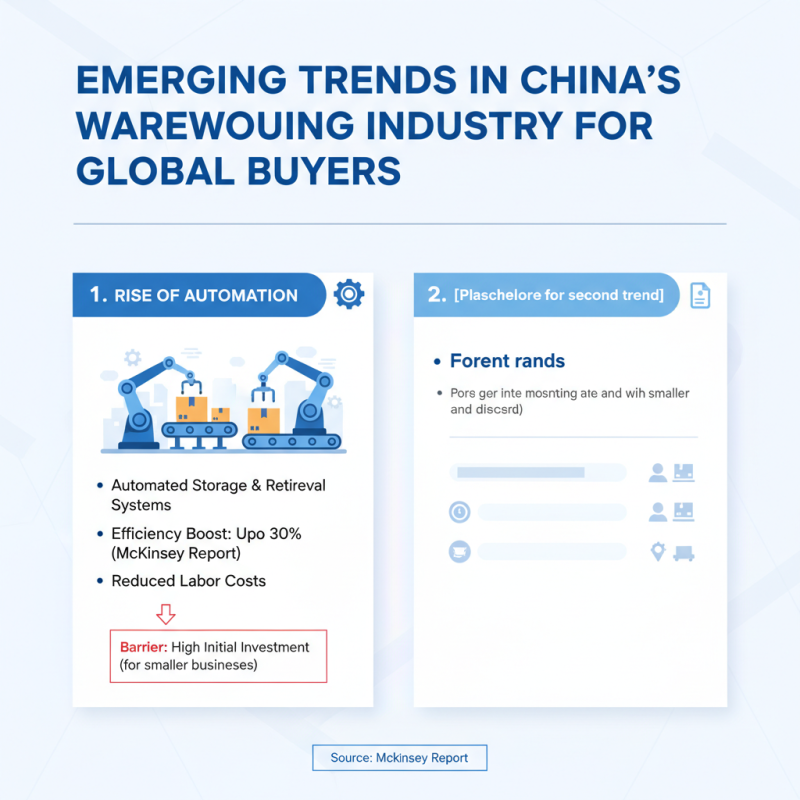
Emerging Trends in China's Warehousing Industry for Global Buyers
The warehousing industry in China is undergoing significant transformations. One emerging trend is the rise of automation. According to a report by McKinsey, automated storage and retrieval systems can enhance operational efficiency by up to 30%. This can significantly reduce labor costs. However, the high initial investment may be a barrier for some businesses, especially smaller ones.
Another trend is the increasing demand for cold chain logistics. The China Cold Chain Logistics Development Report states that the cold chain market will grow by over 15% annually in the next five years. This is driven by the rising consumer demand for fresh food and pharmaceuticals. Yet, many warehouses still lack the necessary infrastructure, which could lead to inefficiencies.
Sustainability is also becoming a priority. Warehouses are adopting more environmentally friendly practices. This includes using renewable energy sources and reducing waste. However, achieving sustainability in warehousing remains challenging. Not all facilities are equipped to implement these changes effectively. As the industry evolves, global buyers must keep a close watch on these trends for informed decision-making.