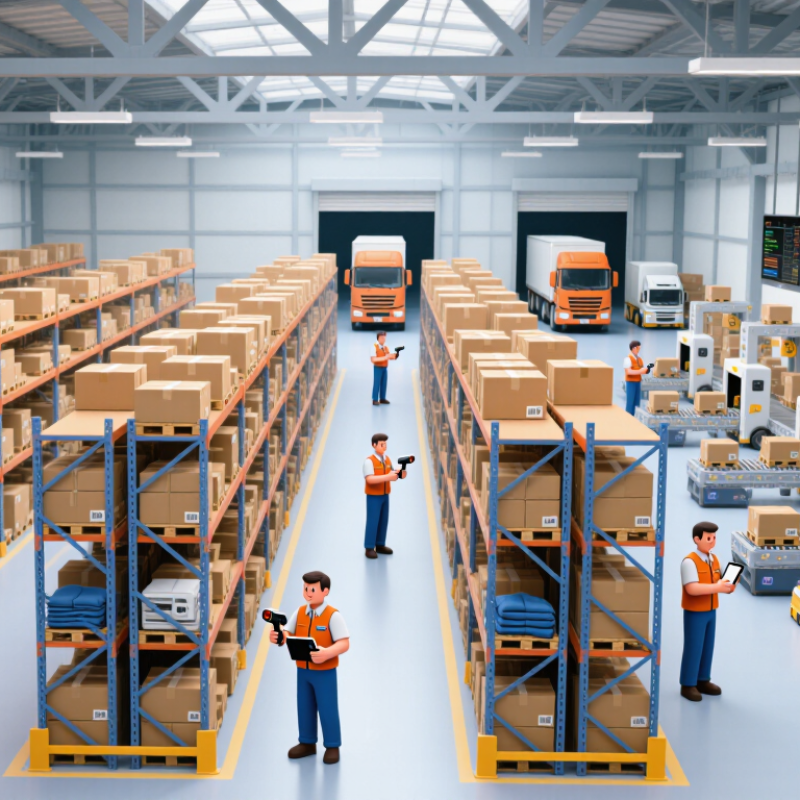
A Chinese Warehouse is more than a building filled with cartons. It is a controlled operating system for receiving, storing, checking, packing, and dispatching products. Its shelves may hold phone accessories, apparel, or small appliances. Every item needs a location, barcode, inventory record, and clear shipping instruction.
The scale is significant. The China Federation of Logistics and Purchasing reported that China’s total social logistics value reached approximately RMB 352.4 trillion in 2023. The report also recorded continued growth in logistics demand. CBRE’s China Logistics MarketView has highlighted strong demand for modern logistics facilities near major consumer markets. These figures show why warehouse performance affects delivery speed, stock accuracy, and operating costs.
Dr. René de Koster, a leading warehousing scholar at Erasmus University Rotterdam, explains the principle clearly: “Warehouses are the nodes in a supply chain where value is added.” A Chinese Warehouse applies that idea through barcode scanning, warehouse management systems, quality checks, and organized picking routes. Some facilities now use conveyors, automated storage, and data dashboards. Many still depend on trained workers and practical judgment.
That contrast matters.
A warehouse can look advanced but perform poorly. A misplaced carton can delay an entire order. Weak inventory records create expensive surprises. This guide examines how a Chinese Warehouse works in daily operations, from inbound receiving to final dispatch. It also considers supplier communication, packaging standards, inventory visibility, and responsible compliance with applicable trade and safety requirements. The process is efficient when systems and people support each other. It is never perfectly automatic.
A Chinese warehouse is a storage and fulfillment facility located in mainland China. It receives products, checks quantities, stores inventory, and prepares orders for delivery. Some facilities also provide labeling, packing, returns processing, and quality inspections. Their central purpose is control: keeping goods visible, protected, and ready to move.
The operating process usually begins with an inbound appointment and barcode scan. Staff compare cartons with purchase records, then assign locations using warehouse management software. Fast-moving items may stay near packing stations. Fragile products need separate shelving and clearer handling rules.
The State Post Bureau of China reported 132.07 billion express parcels in 2023. That volume shows why accurate picking and stable storage systems matter. Small errors can multiply quickly.
A warehouse may serve domestic distribution, export preparation, or compliant bonded operations. Inventory records should show arrival time, batch details, location, and dispatch status. The World Bank’s Logistics Performance Index 2023 placed China 19th globally, with a logistics performance score of 3.7 out of 5.
Strong infrastructure helps, but software alone cannot prevent mistakes. In practice, damaged cartons, delayed updates, and inaccurate stock counts still occur. I would not treat “same-day handling” as guaranteed without checking cut-off times, staffing, and local transport capacity. Good warehouse management is measurable, but never perfectly frictionless.
What Is a Chinese Warehouse and How Does It Work?
Chinese warehouses support storage, order processing, consolidation, and international distribution. Their role has expanded with cross-border trade. According to China Customs, China’s cross-border e-commerce imports and exports reached RMB 2.38 trillion in 2023. That volume requires more than simple shelf storage. It requires accurate inventory records, barcode scanning, quality checks, and reliable dispatch procedures.
Main Types of Chinese Warehouses and Their Uses
Domestic warehouses store products inside mainland China before local delivery or export. They suit manufacturers, wholesalers, and online sellers needing fast order preparation. A typical operation may include receiving cartons, checking quantities, placing goods into numbered locations, and packing orders within 24 hours. Consolidation warehouses combine products from several suppliers into fewer shipments. This can reduce repeated freight handling and improve container utilization. It is useful when orders arrive from different factories.
Bonded warehouses hold eligible imported goods under customs supervision before duties are settled. They can support regional distribution and postpone certain tax payments, subject to local rules. Overseas warehouses store Chinese-origin goods closer to final customers. They shorten delivery times, but they also create storage fees, return-handling costs, and inventory risks. The China Federation of Logistics and Purchasing reported continued growth in China’s logistics activity in 2023, reflecting strong demand for organized distribution capacity. Still, warehouse data is not always perfectly synchronized. A stock count can look correct while damaged cartons remain unrecorded. Regular audits and clear service-level agreements are therefore essential.
Chinese warehouses support different stages of the supply chain, from receiving and storage to customs control, order fulfillment, and dispatch. The chart compares the number of core handling stages typically supported by each main warehouse type.
General warehouses and fulfillment warehouses cover the complete product flow, including receiving, storage, picking, packing, and dispatch. Bonded warehouses focus on customs-controlled storage and release, while cross-docking facilities move goods quickly from inbound receiving to outbound dispatch. Cold-chain warehouses add temperature-controlled storage and handling.
A Chinese warehouse is a controlled space where goods are received, checked, stored, and prepared for delivery. The process begins when cartons arrive from a factory or approved supplier. Staff compare the shipment with purchase records, packing lists, and quantity details. They inspect outer packaging for dents, moisture, or broken seals. Damaged cartons are photographed and moved to an exception area. Small discrepancies matter. Not glamorous, but essential.
After acceptance, workers scan each item and assign a storage location. A barcode or internal reference connects the product with inventory records. Staff place cartons on labeled shelves, pallets, or secure racks. Fragile products need protective spacing. Temperature-sensitive goods require suitable storage conditions. Inventory software records every movement, including receiving, relocation, and stock counting. However, digital records are not automatically accurate. One rushed scan can create a difficult problem later. Experienced supervisors regularly compare physical stock with system data.
When an order arrives, pickers follow a location list and collect the required items. They check product codes, quantities, and visible condition during picking. A second worker may verify the order before packing. Packing teams choose materials that protect the goods without excessive empty space. They add shipment documents when required and seal the carton carefully. Before dispatch, staff confirm the destination details and scan the final package. In practice, the workflow is rarely perfect. A missing label, crowded aisle, or unclear instruction can slow everything down. Careful review often prevents a small mistake from becoming an expensive one.
A Chinese warehouse is a control point for inventory, storage, and order fulfillment. Goods arrive in cartons, are checked against purchase records, and receive barcode labels. Staff then assign each carton to a specific rack or floor location. A warehouse management system records quantity, location, batch details, and movement history.
The 2024 MHI Annual Industry Report found that 55% of supply-chain leaders expect robotics and automation to become widely used within five years.
In practice, many Chinese warehouses combine handheld scanners, conveyor belts, and trained workers. A picker may walk through numbered aisles, scan each item, and place it into a color-coded tote. Cycle counts then compare physical stock with digital records. Small differences reveal damage, misplacement, or delayed system updates.
Order fulfillment begins after payment and inventory confirmation. The system releases a picking task, groups nearby orders, and sends items to packing stations. Workers check product codes, quantities, packaging condition, and shipping labels before dispatch. The 2024 State of Logistics Report identifies inventory visibility as a major operational priority, yet visibility is not perfect. A barcode can be scanned incorrectly. A return can sit unprocessed for hours. Better warehouses use exception alerts, daily reconciliation, and sample inspections, but human judgment still matters. Temperature, humidity, peak-season congestion, and unclear product data can weaken otherwise efficient processes.
What Is a Chinese Warehouse and How Does It Work?
A Chinese warehouse receives goods from manufacturers and prepares them for overseas delivery. Staff check cartons, count units, and compare products with purchase records. Photos can document damaged packaging before shipment. Warehouse software then records stock locations, quantities, and order status. Small details matter here. A missing barcode can delay picking.
When an order arrives, workers collect the correct items and inspect them again. They combine several parcels when consolidation reduces shipping cost and packaging volume. Fragile products need corner protection, inner cushioning, and a suitable outer carton. The warehouse weighs and measures the final package before booking transport. These figures affect freight charges. An incorrect measurement may create an unexpected adjustment.
Shipping staff prepare the commercial invoice, packing list, and product information required by the destination. They also review the declared value and tariff classification carefully. Export procedures depend on accurate, consistent documents. The shipment then moves by air, sea, rail, or an approved courier service. Tracking begins after the carrier accepts the parcel. Customs may request clarification, causing delays outside the warehouse’s control. In my experience, clear communication helps, but it does not eliminate every problem. Some warehouses still rely on manual checks, and human errors happen. Regular inventory audits and shipment photos can expose weak points before goods leave China. Each destination also has different tax, labeling, and delivery requirements.
| Shipping Stage | Warehouse Activity | Typical Time | Required Information or Documents | Main Factors Affecting the Process |
|---|---|---|---|---|
| 1. Supplier Receiving | The warehouse receives cartons, verifies the delivery, records the quantity, and assigns an inventory reference. | Same day to 2 business days | Purchase order, supplier details, carton count, product reference, and receiving instructions | Supplier accuracy, delivery condition, carton labeling, and warehouse workload |
| 2. Inspection and Counting | Staff count units and may check packaging, visible damage, product variations, and basic specifications according to the agreed inspection level. | 1 to 3 business days | Inspection checklist, acceptable defect standards, product photos, and quantity requirements | Inspection depth, order size, product complexity, and detected discrepancies |
| 3. Storage | Accepted inventory is placed in a designated location and updated in the warehouse management system. | Usually completed within 1 business day after receiving | SKU or product code, storage requirements, batch details, and inventory ownership information | Product size, handling requirements, storage temperature, and inventory turnover |
| 4. Order Consolidation | Products from one or more suppliers are combined into a shipment to reduce unused space and simplify export handling. | 1 to 3 business days | Shipment plan, item list, destination, shipping method, and delivery deadline | Supplier arrival dates, carton compatibility, destination rules, and shipment urgency |
| 5. Repacking and Labeling | The warehouse removes unnecessary packaging, combines units when permitted, adds protective materials, and applies shipping or carton labels. | 1 to 3 business days | Label artwork, carton marks, barcode data, packing instructions, and destination requirements | Packaging material, special labeling rules, product fragility, and order volume |
| 6. Weighing and Measuring | The packed shipment is weighed and measured to calculate billable weight and prepare transport documents. | Same day to 1 business day | Final packing list, carton dimensions, gross weight, net weight, and package quantity | Actual weight, dimensional weight, packaging density, and carrier calculation rules |
| 7. Shipping Method Selection | The shipment is assigned to air freight, ocean freight, express delivery, rail, or a multimodal service according to cost and time requirements. | Same day to 2 business days | Destination, cargo description, dimensions, weight, delivery terms, and requested delivery date | Budget, transit time, cargo type, destination regulations, and available transport capacity |
| 8. Export Documentation | The warehouse or appointed logistics provider prepares shipment details for export clearance and transport booking. | 1 to 3 business days | Commercial invoice, packing list, transport document, product description, value, origin, and any applicable permits | Commodity classification, product restrictions, declared value, document accuracy, and customs requirements |
| 9. Export Clearance and Dispatch | The shipment is handed to the selected carrier after export procedures, security checks, and booking confirmation are completed. | 1 to 5 business days | Approved export declaration, booking reference, shipping label, and final cargo data | Customs inspection, port or airport congestion, cutoff times, holidays, and cargo classification |
| 10. International Transit | The shipment moves through the international transport network and may pass through one or more transit points. | Express: about 3–7 days Air freight: about 5–15 days Ocean freight: about 20–45 days |
Transport document, tracking reference, commercial invoice, and packing list | Route, service type, weather, capacity, transshipment, seasonal demand, and destination conditions |
| 11. Import Customs Clearance | The destination-side broker or carrier submits import information, calculates applicable duties and taxes, and responds to customs queries. | Several hours to several business days | Commercial invoice, packing list, transport document, importer details, commodity code, and permits when required | Commodity classification, customs valuation, product regulations, inspection, and duty payment |
| 12. Final-Mile Delivery | After customs release, the shipment is transferred to a local delivery network and delivered to the final address or fulfillment location. | 1 to 7 business days after release | Delivery address, recipient contact, customs release status, and proof-of-delivery details | Distance, address accuracy, local delivery capacity, public holidays, and failed delivery attempts |